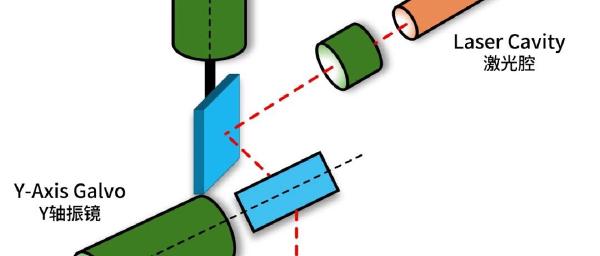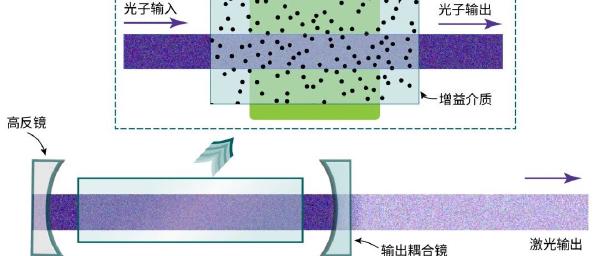
This article opens the Laser Fundamentals series with the first event in every laser process: how matter absorbs optical energy. Later articles connect this foundation to laser sources, processing parameters, beam delivery, and manufacturing applications.
Optical properties Electronic absorption Plasma Energy relaxation
Introduction
Laser absorption is the starting point of every subsequent laser–matter interaction. How a material accepts optical energy determines whether the next response is heating, melting, vaporization, ablation, or a more complex physical or chemical transformation. Understanding this initial energy-coupling process is therefore essential for optimizing a process and diagnosing failures.
Absorption is not one mechanism. It is the combined result of several mechanisms whose relative importance depends strongly on the laser, including wavelength, intensity, and pulse duration, and on the material, including whether it is a metal, semiconductor, polymer, ceramic, or glass.
This article answers five questions:
- Which laser properties make efficient absorption possible?
- Before a plasma forms, how do electrons in metals, semiconductors, and insulators receive energy?
- Which variables control absorption efficiency?
- After absorption, how is energy redistributed into heat, bond breaking, or stress?
- How do those microscopic processes appear macroscopically as melting, vaporization, ablation, or modification?
Wavelength, intensity, pulse duration, and polarization.
Free electrons, interband transitions, and nonlinear ionization.
Electron thermalization, phonon coupling, and heat diffusion.
Heating, reaction, stress, melting, and ablation.
Laser properties that govern coupling
The distinctive interaction of a laser with matter begins with the optical properties of the beam. Together they determine whether absorption occurs, which mechanism dominates, and what response follows.
Monochromaticity
A laser emits light within a narrow wavelength range. Material absorption spectra are strongly wavelength dependent, so monochromatic light can selectively excite a particular electronic or vibrational transition when the wavelength overlaps an absorption band. The energy of one photon is
\[ E=h\nu=\frac{hc}{\lambda}. \]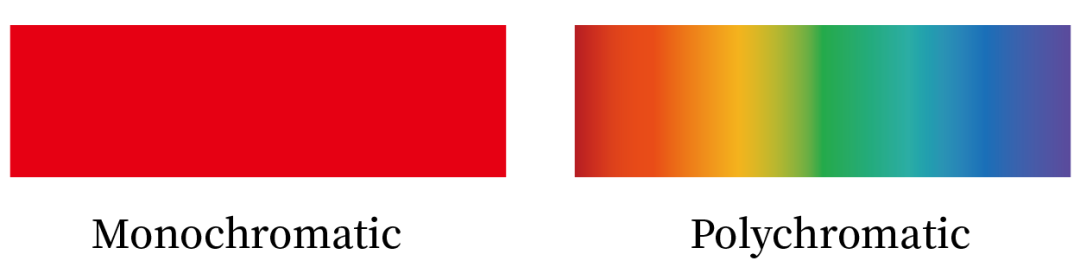
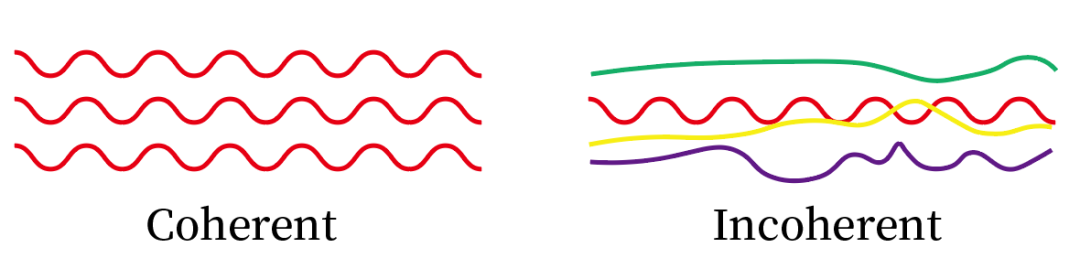
Coherence
Laser waves maintain a well-defined phase relationship. Spatial coherence allows the beam to be focused close to the diffraction limit, concentrating power into a very small area and producing extremely high intensity.
Intensity
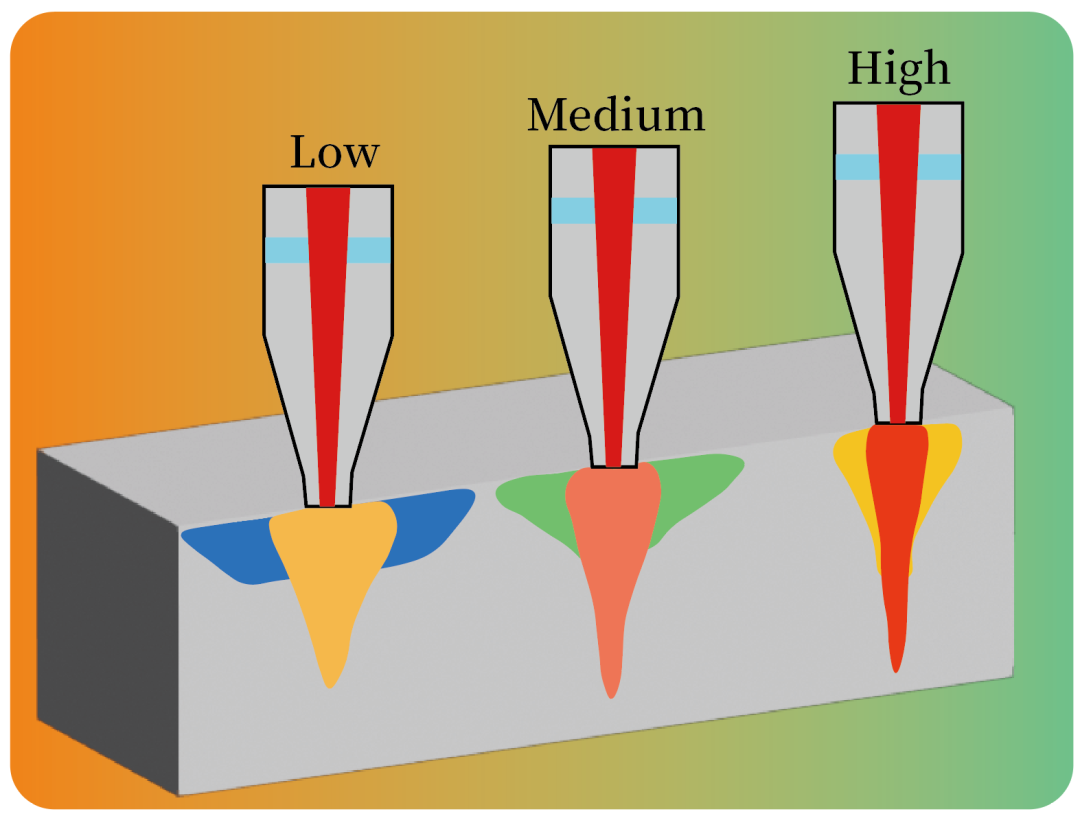
High optical intensity, meaning power per unit area, drives nonlinear processes such as multiphoton absorption. It can therefore make a nominally transparent material absorb strongly within the focal volume.
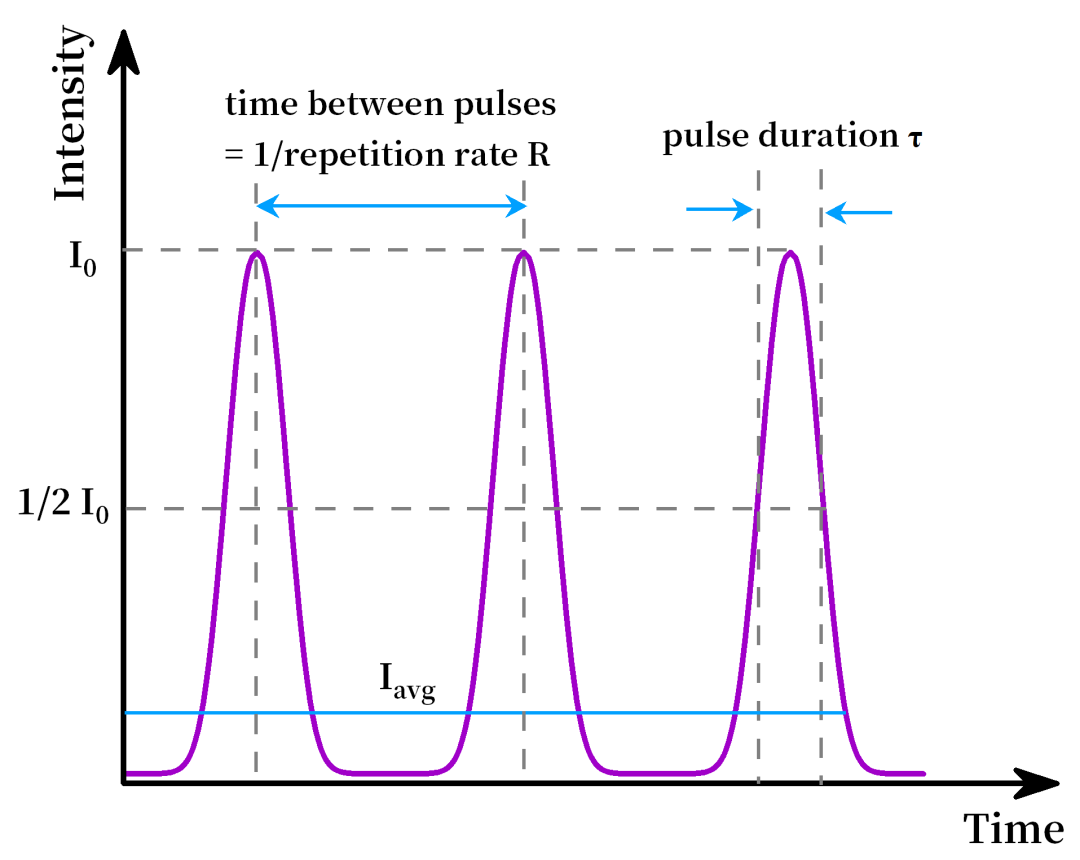
Pulse duration
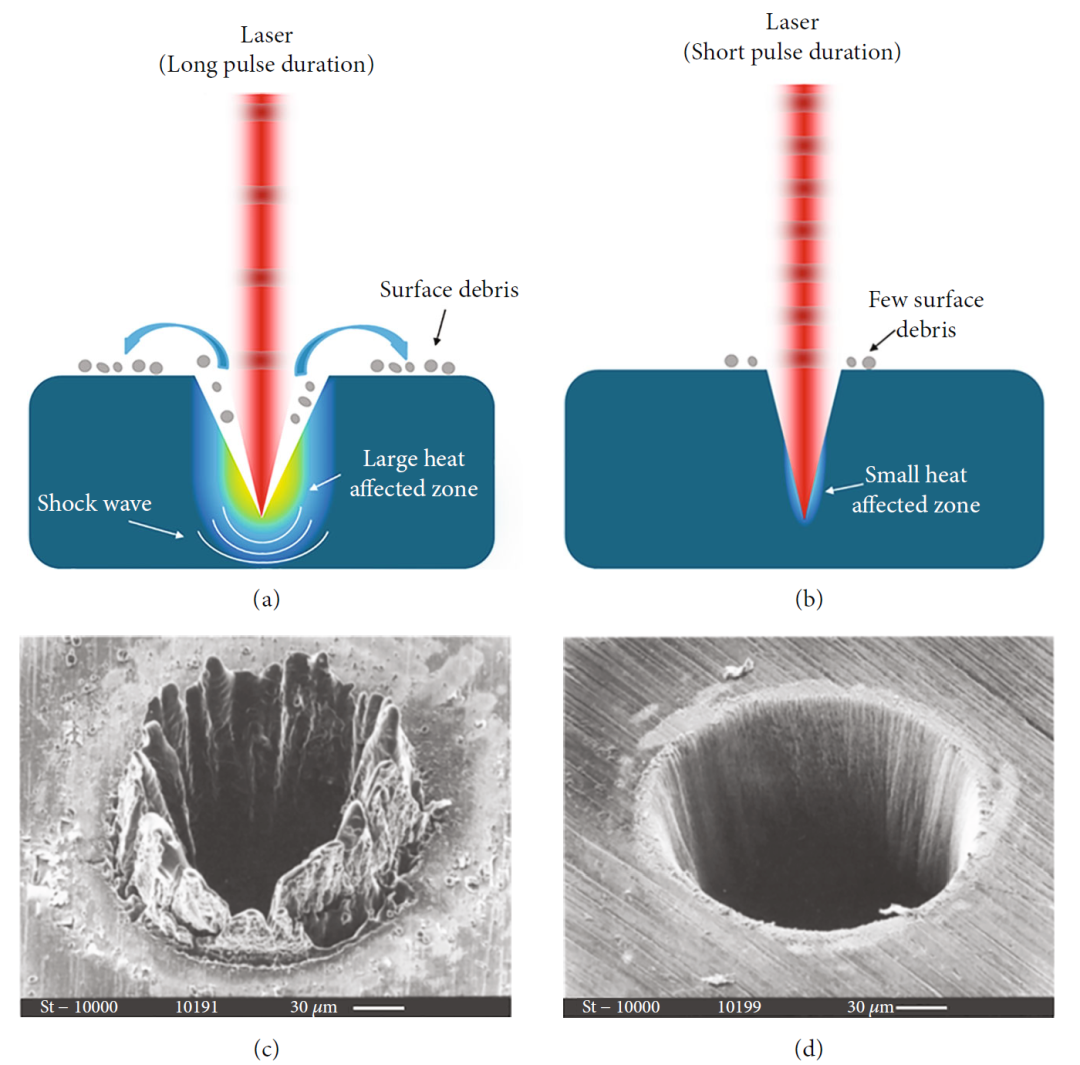
Pulse duration controls the rate at which energy is delivered. Femtosecond and picosecond pulses can deposit energy before the material reaches thermal equilibrium, producing nonequilibrium and partly nonthermal responses that are inaccessible to long pulses or continuous-wave beams.
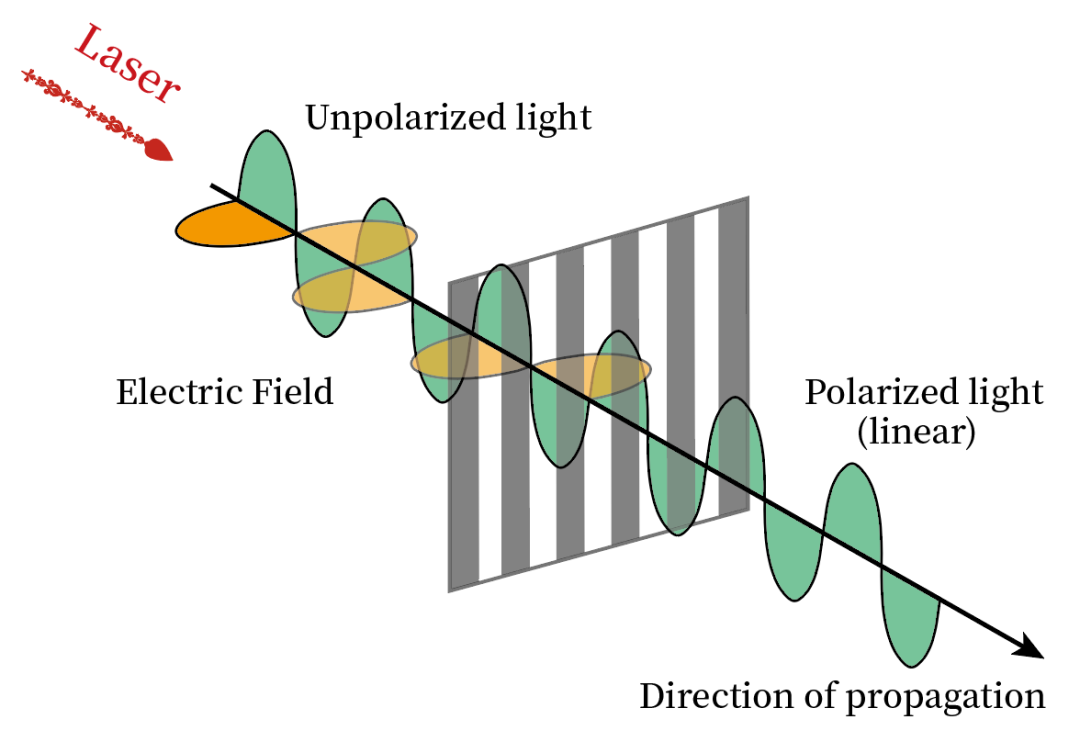
Polarization
The direction in which the optical electric field oscillates can change absorption substantially, especially in anisotropic materials or at particular incidence angles such as the Brewster angle.
Fundamental absorption mechanisms
Before the deposited energy becomes high enough to create a plasma, the initial electronic absorption mechanism is governed mainly by the material’s electronic structure.
Metals: free-electron absorption
The dominant picture is free-electron absorption, commonly described with the Drude model. Metals contain many mobile conduction electrons. The oscillating laser field accelerates them; collisions with lattice ions and other scattering events then convert the ordered motion into heat. At the macroscopic level this resembles field-driven Joule heating.
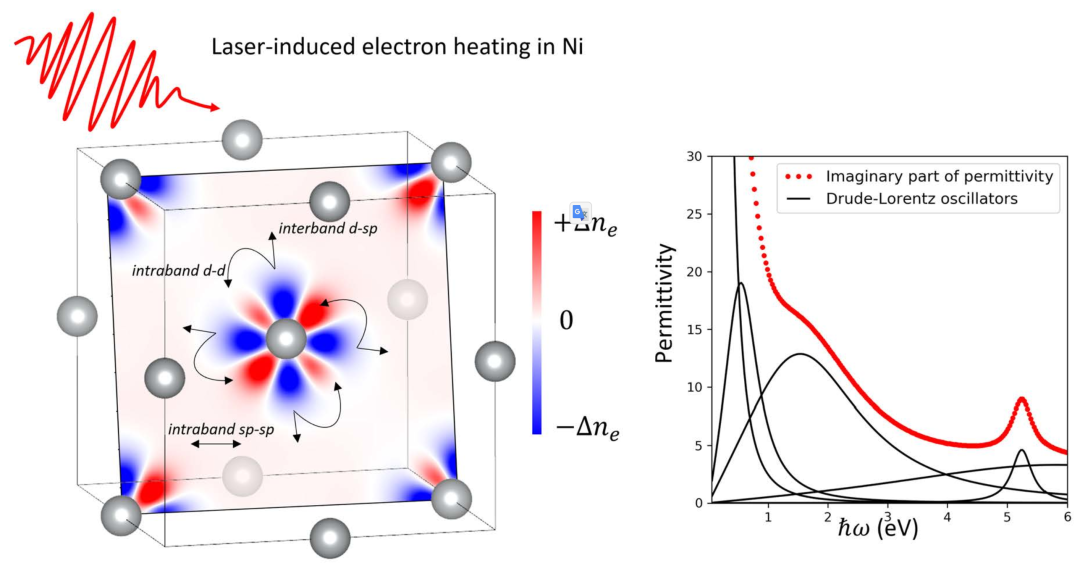
Two electronic-transition classes are relevant:
- Intraband transitions: a conduction electron absorbs energy and moves to a higher state within the same band; this is closely related to free-electron absorption.
- Interband transitions: at visible or ultraviolet wavelengths, a photon can lift an electron from a band below the Fermi level into a higher conduction state.
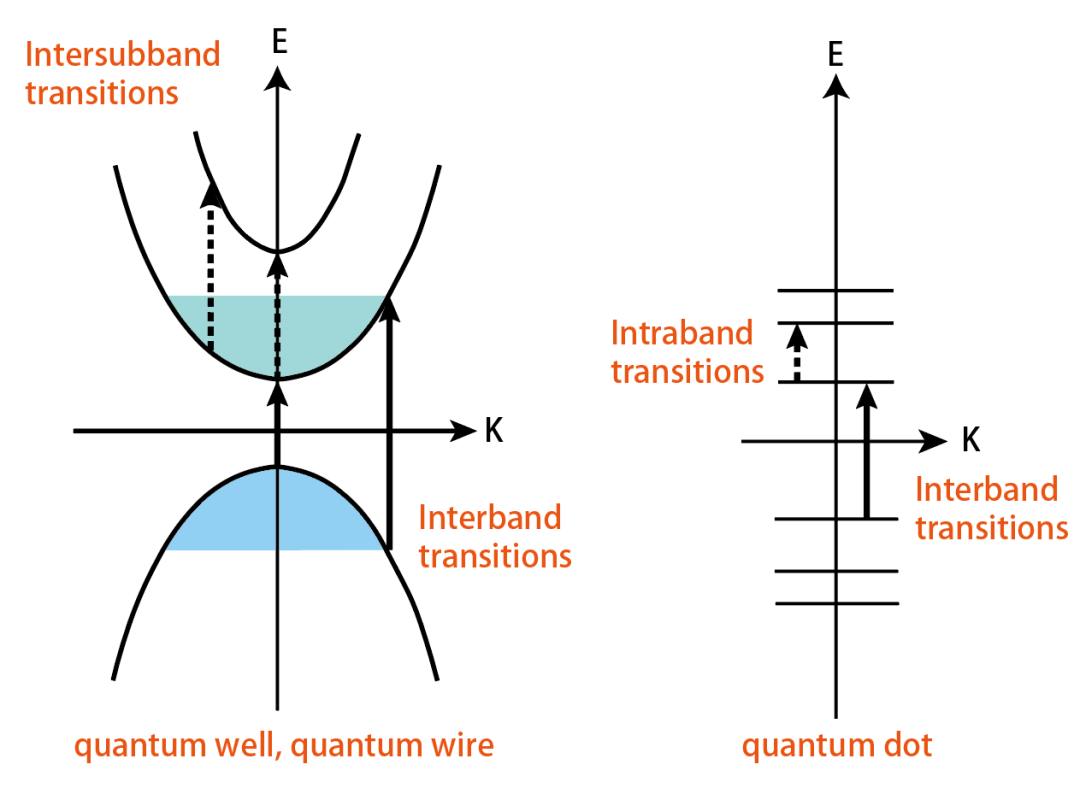
Metals, especially at infrared wavelengths, may reflect most incident power. The fraction that enters the surface is nevertheless absorbed within a very thin region known as the skin depth, often only tens of nanometers thick.
Semiconductors and dielectrics: band-gap control
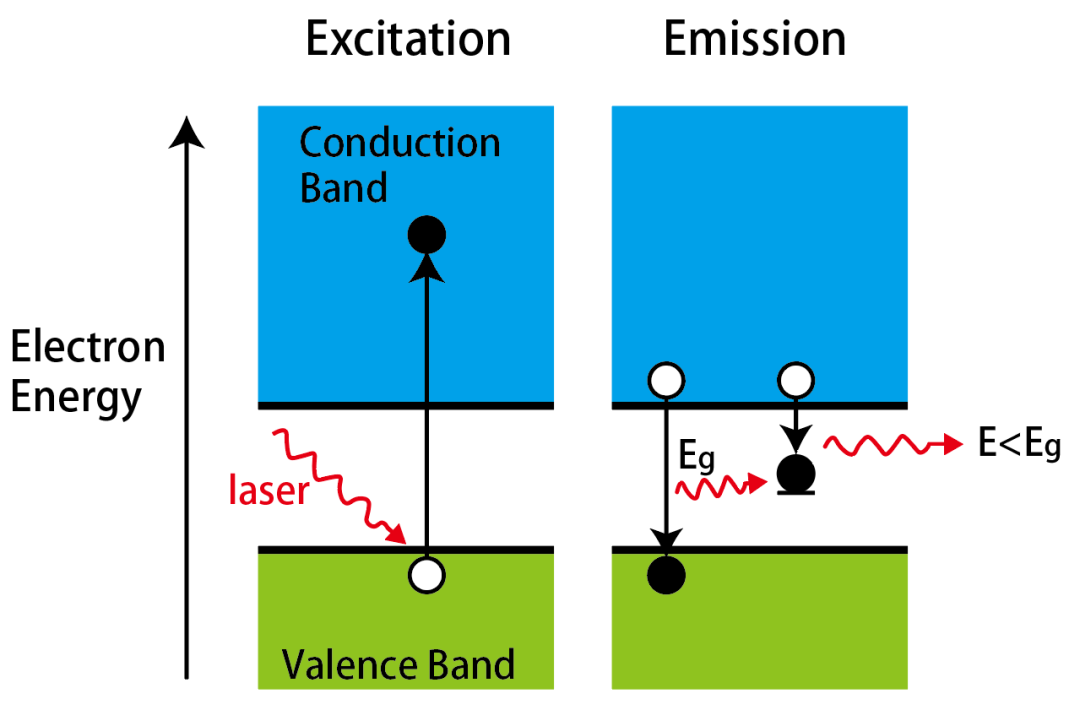
Semiconductors and dielectrics have a band gap \(E_g\) separating a filled valence band from an approximately empty conduction band.
- When \(\hbar\omega>E_g\): a valence electron can absorb one photon and move directly into the conduction band, producing an electron–hole pair through efficient linear absorption.
- When \(\hbar\omega
In multiphoton absorption, an electron absorbs several lower-energy photons within an extremely short interval. Two-photon absorption, for example, requires
\[ 2\hbar\omega\ge E_g. \]Because the photons must arrive almost simultaneously, the probability rises steeply with intensity and is usually significant only near the focus of a pulsed laser.
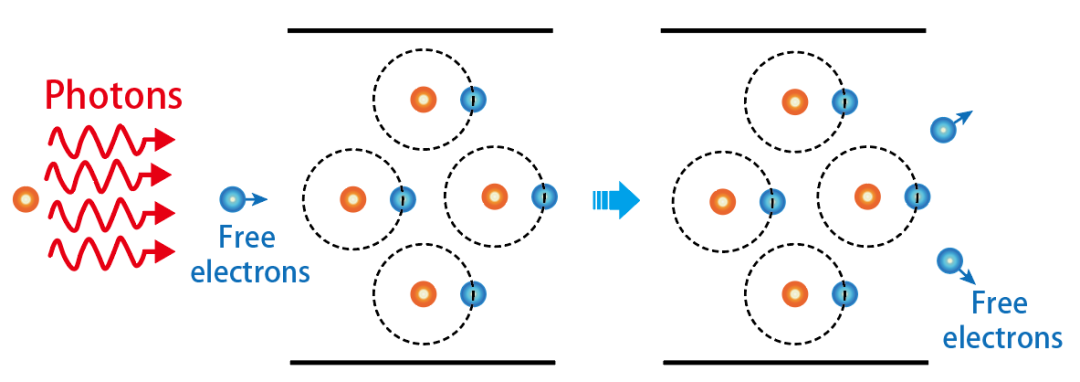
Avalanche ionization begins once a small seed population reaches the conduction band. The laser field accelerates those electrons. An electron with sufficient kinetic energy can collisionally excite another valence electron across the gap, creating an additional electron–hole pair. Repetition of this process produces exponential carrier multiplication and a sharp increase in absorption.
Variables that change laser absorption
Absorption efficiency is controlled jointly by laser parameters and material properties. More importantly, these quantities evolve during processing and form feedback loops.
Laser parameters
- Wavelength \(\lambda\): sets photon energy. For direct one-photon absorption in a semiconductor, \(hc/\lambda>E_g\) must be satisfied.
- Intensity \(I\) and fluence \(F\): intensity controls nonlinear rates such as multiphoton and avalanche processes, while fluence determines the total energy delivered in one pulse and therefore the extent of melting or ablation.
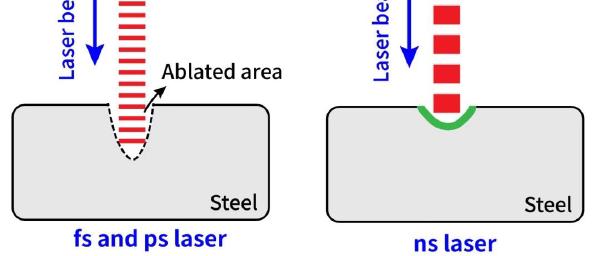
- Pulse duration \(\tau_p\): separates nearly thermal from strongly nonequilibrium interaction. Femtosecond and picosecond pulses deposit energy before significant diffusion, reaching high peak power with a small heat-affected zone. During nanosecond pulses, deposition and thermal diffusion overlap, so melting and vaporization become more prominent.
- Polarization: in anisotropic crystals, absorption can vary periodically as the electric-field direction rotates relative to crystallographic axes.
Material properties
- Electronic structure and band gap \(E_g\): determine the fundamental absorption spectrum.
- Optical constants \(n\), \(k\), and \(R\): refractive index, extinction coefficient, and reflectance determine how much light enters and is attenuated, and all can change with temperature and phase.
- Physical state and temperature: melting may alter reflectance and the dominant absorption mechanism. Temperature also changes electron–phonon scattering and therefore the absorption coefficient.
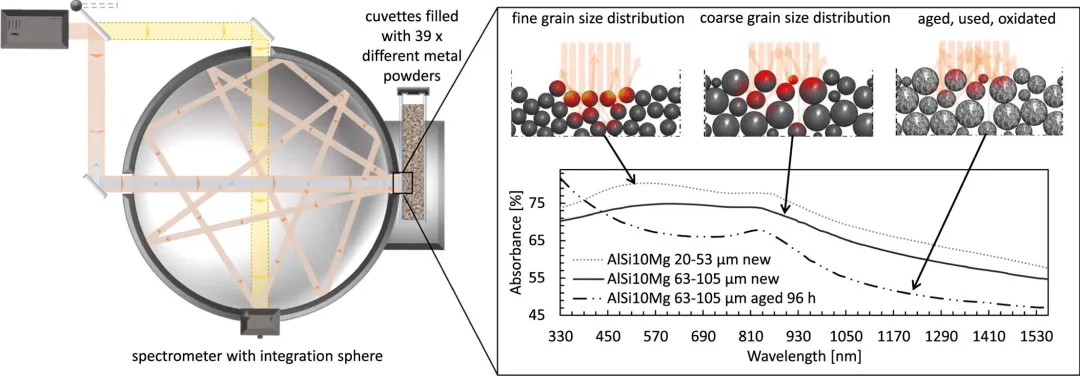
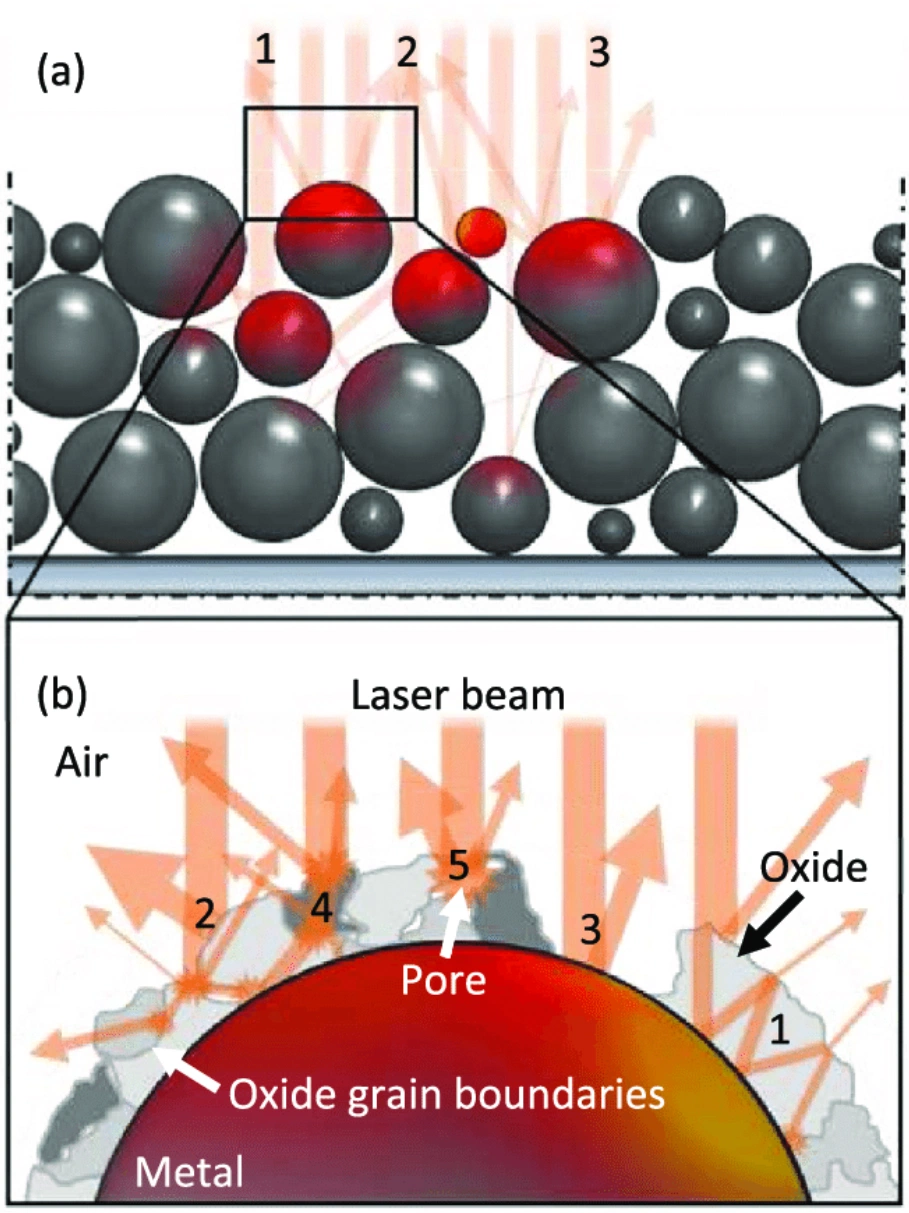
- Surface topography and roughness: multiple reflections within a rough surface or powder bed trap light and raise total absorptance.
Absorption changes the material, and the changed material modifies subsequent absorption. Rising temperature alters optical constants; ablation reshapes the surface; the new state then changes how the next pulse couples.
The electronic system receives photon energy.
Carrier density and the solid or liquid state evolve.
\(n\), \(k\), \(R\), and the absorption coefficient shift.
Laser-induced plasma
When deposited energy becomes sufficiently high, the material can enter a plasma state: a highly ionized mixture of ions, electrons, and neutral species.
How the plasma forms
- Multiphoton ionization: an intense ultrashort pulse allows an atom to absorb several photons and ionize directly, creating seed electrons.
- Avalanche or cascade ionization: seed electrons are accelerated by the field and collisionally ionize additional atoms, rapidly building a dense plasma.
How the plasma absorbs additional energy
- Inverse bremsstrahlung: the principal absorption mechanism in many laser plasmas. During collisions with ions, free electrons absorb energy from the optical field and heat the plasma.
- Resonance absorption: under suitable density and incidence conditions, the laser drives plasma waves that transfer energy efficiently to electrons.
- Plasma shielding: once electron density exceeds the critical value, the plasma reflects much of the incident beam and shields the underlying material.
A plasma can therefore enhance absorption and simultaneously make the process harder to control. In some welding regimes, plasma-related absorption can be very high, while expansion and shielding continuously redistribute where energy is deposited.
Relaxation after absorption
Once electrons have absorbed optical energy, a sequence of relaxation processes redistributes it and eventually produces macroscopic change.
The two-temperature model
The two-temperature model is widely used for ultrafast laser interaction with metals. It treats the electron system and the lattice or phonon system as coupled subsystems with separate temperatures, \(T_e\) and \(T_l\).
- Photon absorption, within femtoseconds: electrons receive the laser energy first, so \(T_e\) rises rapidly while \(T_l\) remains near its initial value.
- Electron–electron thermalization, approximately 50–100 fs: energetic electrons collide and form an internally equilibrated Fermi–Dirac distribution.
- Electron–phonon coupling, approximately 0.1–10 ps: hot electrons transfer energy to the colder lattice. The coupling strength controls how rapidly lattice heating begins.
- Lattice equilibration and heat diffusion, beyond roughly 10 ps: phonon–phonon scattering establishes local lattice equilibrium, after which classical heat conduction carries energy deeper into the material.
This electron-to-lattice pathway explains why femtosecond, picosecond, and nanosecond irradiation produce different outcomes. When the pulse is shorter than the electron–phonon coupling time, nonequilibrium effects dominate; when it is longer, the response approaches conventional thermal heating.
Macroscopic forms of absorbed energy
Initial absorption and subsequent relaxation appear mainly through three response classes. Which one dominates depends on the rate of energy deposition, set largely by pulse duration, and the total deposited energy, set by fluence.
Photothermal response
When deposition is relatively slow, energy becomes lattice heat and causes temperature rise, melting, vaporization, or thermal decomposition. This is the dominant form for continuous-wave and long-pulse processing.
Photochemical response
When photon energy matches a molecular bond energy or activation pathway, photons can directly break bonds or initiate reactions without first heating the entire material volume.
Photomechanical response
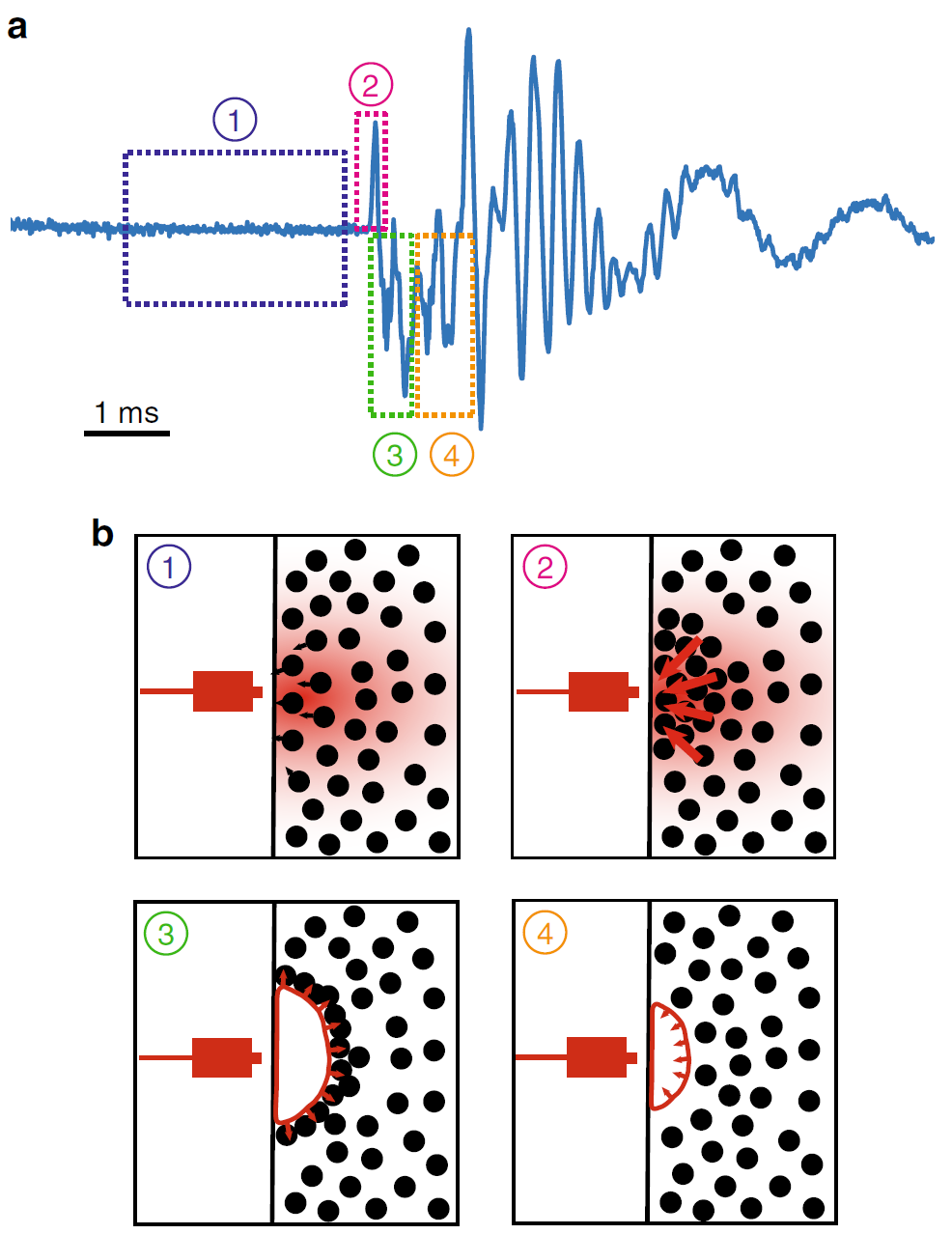
Extremely rapid, localized deposition produces intense thermoelastic expansion, stress waves, and sometimes shock waves. When the stress exceeds the local fracture strength, material may spall or eject in fragments. This response is especially important for high-intensity ultrashort pulses.
References
- Brandau, B., Da Silva, A., Wilsnack, C., Brueckner, F., & Kaplan, A. F. H. “Absorbance Study of Powder Conditions for Laser Additive Manufacturing.” Materials & Design, 216, 110591 (2022). DOI: 10.1016/j.matdes.2022.110591.
- Wang, S., Yang, J., Deng, G., & Zhou, S. “Femtosecond Laser Direct Writing of Flexible Electronic Devices: A Mini Review.” Materials, 17, 557 (2024). DOI: 10.3390/ma17030557.
- Kavokine, N., Zou, S., Liu, R., Niguès, A., Zou, B., & Bocquet, L. “Ultrafast Photomechanical Transduction through Thermophoretic Implosion.” Nature Communications, 11, 50 (2020). DOI: 10.1038/s41467-019-13912-w.
- Silaeva, E., Saddier, L., & Colombier, J.-P. “Drude-Lorentz Model for Optical Properties of Photoexcited Transition Metals under Electron-Phonon Nonequilibrium.” Applied Sciences, 11, 9902 (2021). DOI: 10.3390/app11219902.
The original Chinese edition was published by “Laser Insights” in Chongqing on June 12, 2025, at 07:15. View the original post