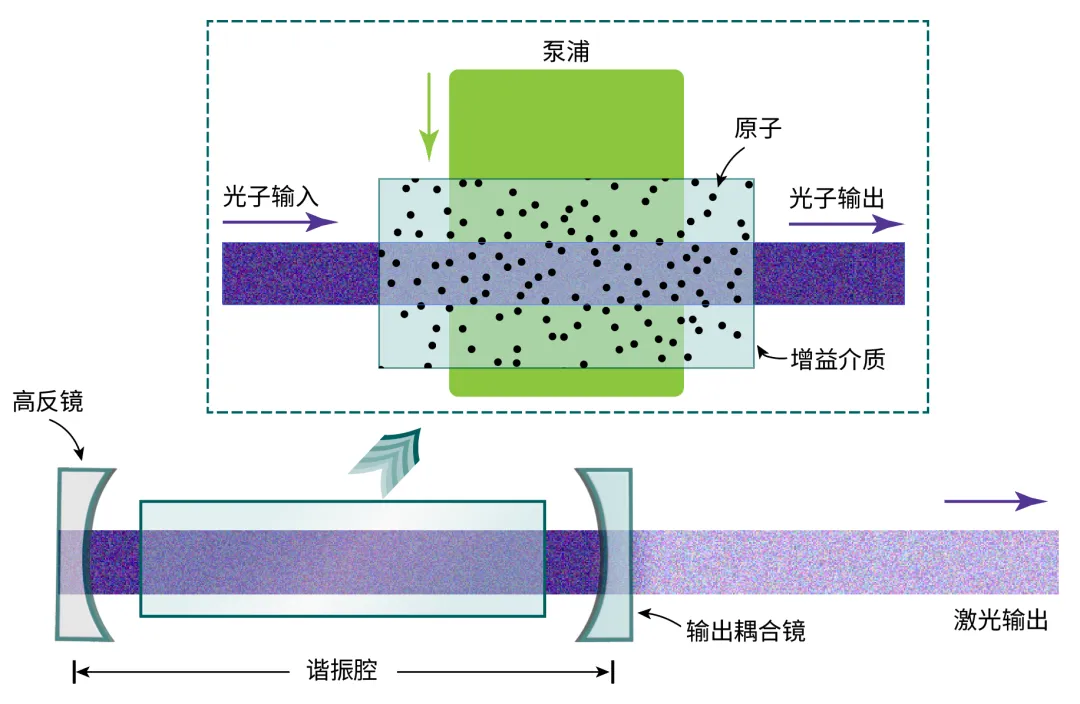
Every laser depends on three core elements: a gain medium, a pump source, and an optical resonator. Their coordinated behavior turns disordered input energy into a directional, coherent laser beam.
Stimulated emission Population inversion Energy injection Mode selection
Application background
From an engineering perspective, a laser is a precision electro-optical energy-conversion device. Its central task is to transform disordered pump energy, through a specific physical mechanism, into coherent electromagnetic radiation whose direction, frequency, and phase are highly organized.
This organization appears as the familiar laser properties of monochromaticity, coherence, and directionality. It enables precise control of energy in space, time, and frequency, which is why lasers are indispensable in manufacturing, communications, medicine, and scientific research.
The physical basis of the conversion is stimulated emission. But stimulated emission can produce net optical gain only when it overcomes the material’s natural absorption. The system must therefore use an external pump to create a nonequilibrium population inversion. Stimulated emission and population inversion form the theoretical core of laser physics.
Three subsystems implement these microscopic processes at the macroscopic scale:
Provides quantized energy levels, enables photon replication and amplification, and determines the output wavelength.
Injects external energy and creates and maintains population inversion.
Passes light repeatedly through the gain medium, supplies positive feedback, selects modes, and shapes the output beam.
Foundations of laser physics: stimulated emission and population inversion
Laser action originates in the quantum interaction between matter and light. The essential concepts are atomic energy levels, three photon–matter interaction processes, and the condition required for amplification: population inversion.
Three interactions between atoms and photons
Electrons in an atom can occupy only discrete quantized energy levels. The lowest stable level is the ground state; higher levels are excited states.
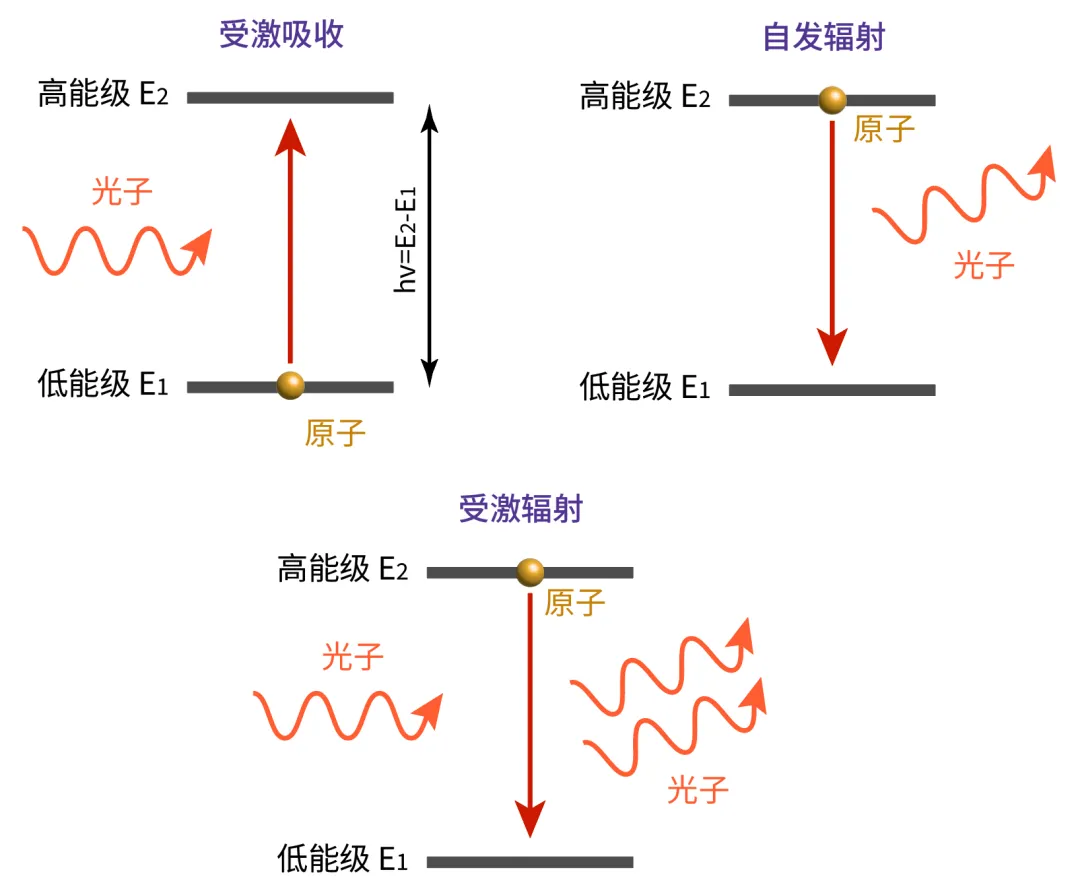
Stimulated absorption: an incident photon with energy \(h\nu\) can be absorbed when
\[ h\nu=E_2-E_1 \]causing an atom to move from the lower level \(E_1\) to the upper level \(E_2\).
Spontaneous emission: an atom in \(E_2\) can return to \(E_1\) without external stimulation and emit a photon with \(h\nu=E_2-E_1\). Its direction, phase, and polarization are random. Ordinary light sources such as the Sun and incandescent lamps are dominated by spontaneous emission and are therefore incoherent.
Stimulated emission: when an excited atom encounters a photon with the correct energy, it can be induced to return to \(E_1\) and emit a second photon. The new photon is identical to the incident photon in frequency, phase, polarization, and direction. One photon becomes two—a microscopic act of photon replication and amplification.
Population inversion
Whether a beam is amplified or attenuated while passing through a material depends on the relative rates of stimulated emission and stimulated absorption. Under thermal equilibrium, the Boltzmann distribution places far more particles in lower energy levels than in upper levels. A photon is therefore more likely to be absorbed than to trigger stimulated emission.
Net amplification requires the system to leave thermal equilibrium and place more particles in the upper laser level than in the lower laser level. This abnormal distribution is called population inversion. Creating and maintaining inversion is an absolute requirement for laser action.
Why a two-level system cannot sustain amplification
In a system containing only \(E_1\) and \(E_2\), the same pump radiation drives both \(E_1\rightarrow E_2\) stimulated absorption and \(E_2\rightarrow E_1\) stimulated emission, with equal transition probabilities. Even with an intense pump, the system can reach only the saturated condition
\[ N_2=N_1 \]where absorption and emission balance. It cannot establish \(N_2>N_1\). A pure two-level system therefore cannot sustain continuous laser amplification.
Three-level systems: storing particles in a metastable state
A three-level system introduces two excited states above the ground state. The key is a long-lived metastable state, with a typical lifetime of \(10^{-3}\) to \(10^{-6}\ \mathrm{s}\), thousands of times longer than an ordinary excited state.
- Pumping: atoms move from ground state \(E_1\) to the short-lived upper state \(E_3\);
- Rapid decay: in roughly \(10^{-12}\ \mathrm{s}\), particles undergo a nonradiative transition from \(E_3\) to metastable \(E_2\), releasing energy as vibration or heat;
- Accumulation and inversion: because \(E_2\) is long-lived, particles accumulate there. Sufficient pumping can create inversion between \(E_2\) and \(E_1\);
- Laser transition: a photon satisfying \(h\nu=E_2-E_1\) triggers stimulated emission from \(E_2\) to \(E_1\).
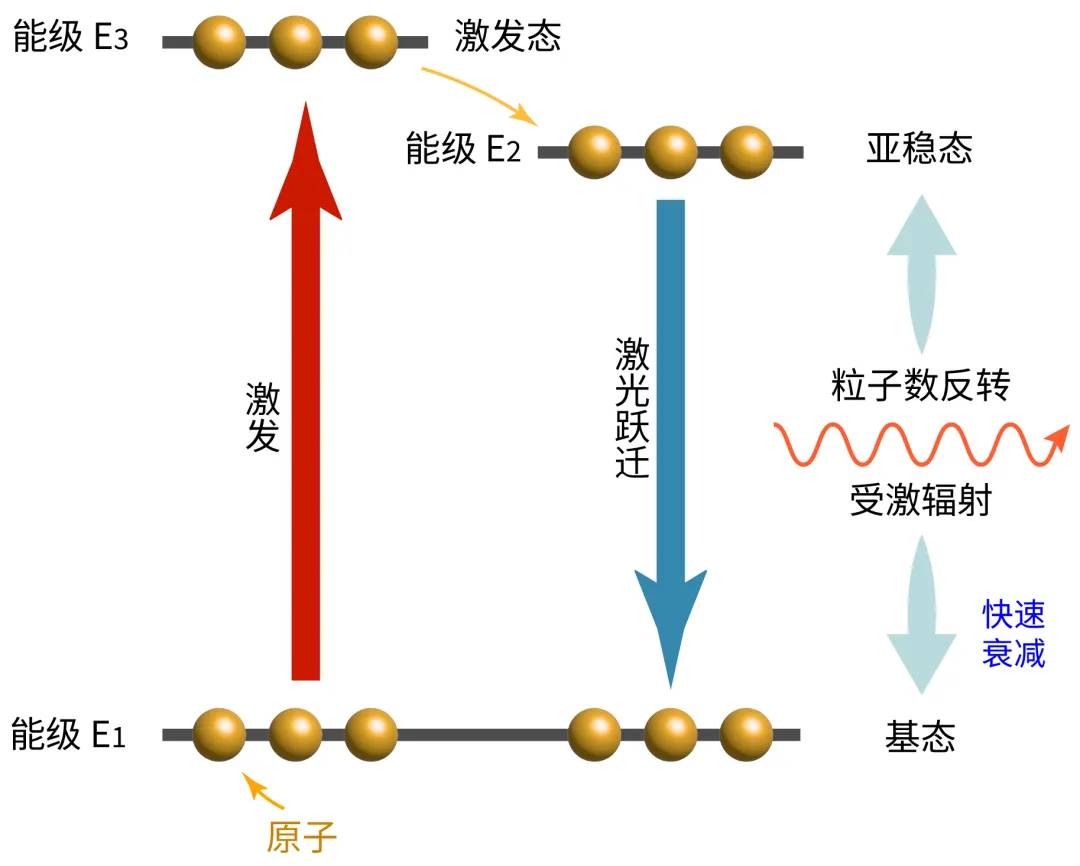
Because the lower laser level is the heavily populated ground state, more than half the ground-state particles must be pumped upward before inversion appears. Three-level systems therefore have a high pump threshold and comparatively low efficiency.
Four-level systems: keeping the lower laser level nearly empty
A four-level system inserts another state between the lower laser level and the ground state:
- atoms are pumped from \(E_1\) to high state \(E_4\);
- they rapidly decay from \(E_4\) to metastable \(E_3\);
- laser emission occurs through \(E_3\rightarrow E_2\), with \(h\nu=E_3-E_2\);
- particles in \(E_2\) quickly return nonradiatively to \(E_1\).
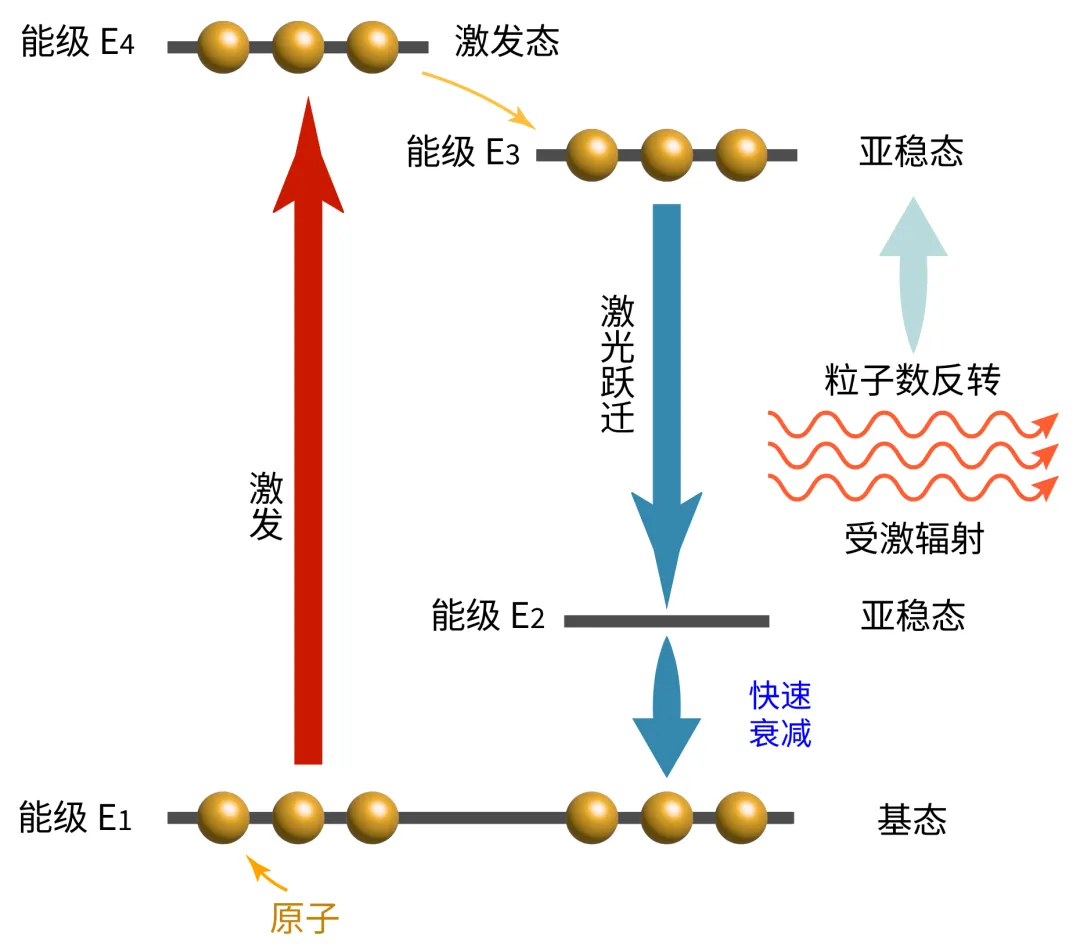
Because the lower laser level is nearly empty, only a small upper-state population is needed to exceed it. Four-level lasers have a much lower pump threshold and higher efficiency than three-level systems. Nd:YAG is a standard four-level laser.
Gain media
A gain medium is a material that can develop population inversion under external excitation and amplify light at selected wavelengths through stimulated emission. It is where photons are generated and amplified, and its physical and chemical properties fundamentally determine laser performance and application range.
- Output wavelength: determined by the energy separation between the upper and lower laser levels;
- Laser type and performance: medium geometry, thermal properties, and optical properties influence power, efficiency, beam quality, CW or pulsed operation, and system architecture.
An effective gain medium requires a suitable three- or four-level scheme, a sufficiently long upper-state lifetime, high quantum efficiency, resistance to intense light and elevated temperature, and good optical uniformity.
Solid-state gain media
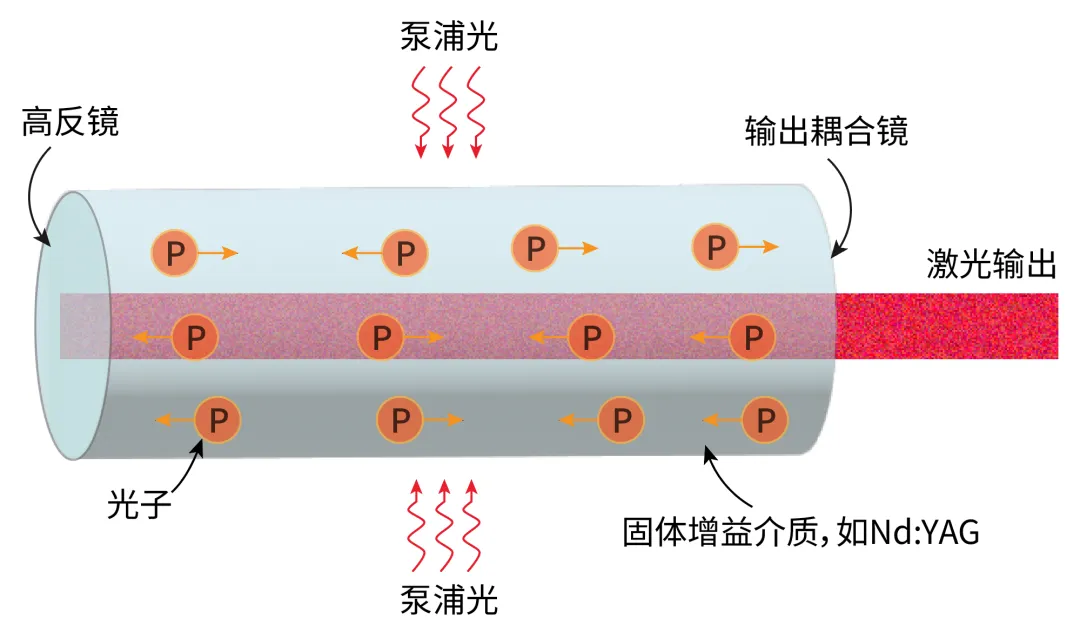
Solid-state lasers generally place a small concentration of optically active ions inside a transparent crystal or glass host. The host provides a stable lattice; the dopant supplies the laser energy levels.
- Ruby: \(\mathrm{Al_2O_3}\) doped with \(\mathrm{Cr^{3+}}\), a three-level system emitting 694.3 nm red light and the first laser gain material demonstrated historically;
- Nd:YAG: \(\mathrm{Nd^{3+}:Y_3Al_5O_{12}}\), a classic four-level system emitting 1064 nm near-infrared radiation, widely used in industry and medicine;
- Yb:YAG: uses \(\mathrm{Yb^{3+}}\), emits near 1030 nm, and offers high efficiency and favorable thermal performance for high-power systems;
- Ti:sapphire: \(\mathrm{Ti^{3+}}\)-doped sapphire with a broad 650–1100 nm emission band, important for tunable and ultrafast lasers.
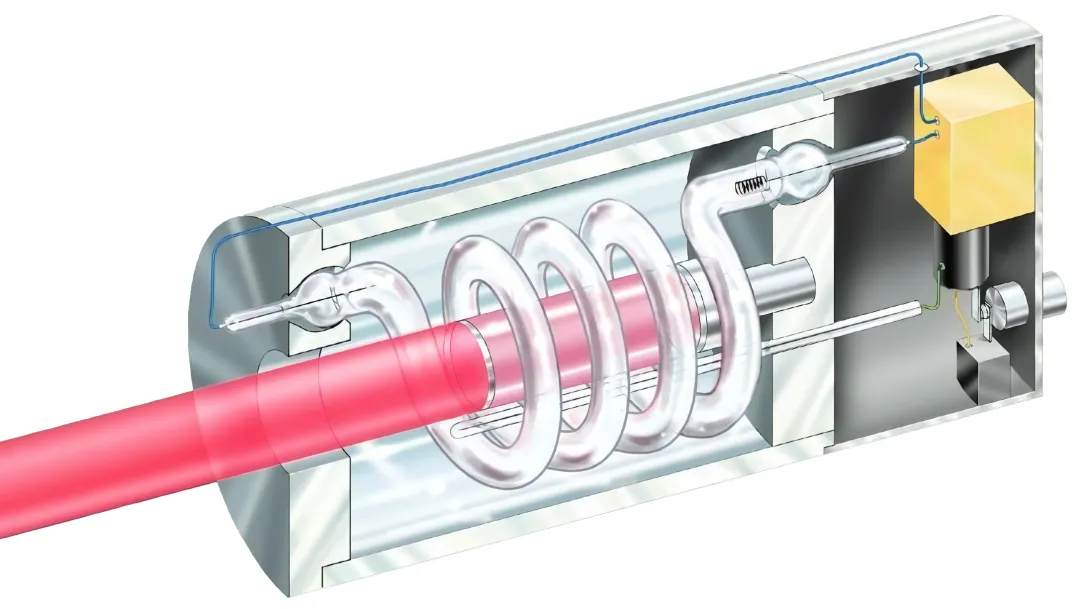
Gas gain media
Gas lasers use atomic, ionic, or molecular gases:
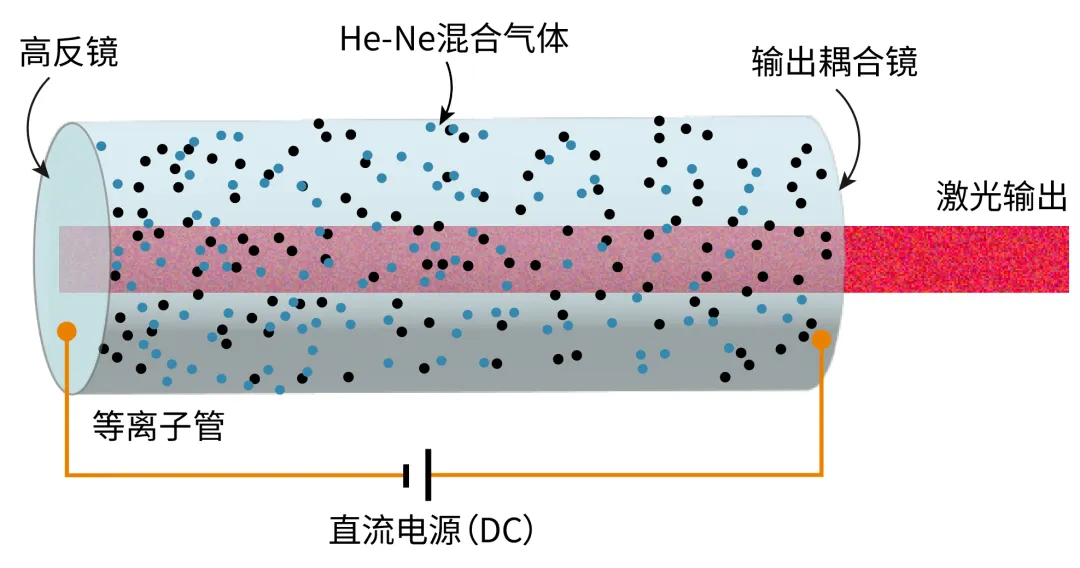
- He–Ne: a helium–neon mixture emitting primarily at 632.8 nm, known for good beam quality and stability in alignment and measurement;
- CO₂: a mixture of \(\mathrm{CO_2}\), \(\mathrm{N_2}\), and helium that emits at 10.6 µm through molecular vibrational transitions. It is a major high-power industrial laser for cutting, welding, and marking;
- Argon ion (Ar⁺): emits several visible wavelengths including 488 nm blue and 514.5 nm green;
- Excimer: uses rare-gas halide species such as KrF, ArF, and XeCl that exist in a bound excited state and dissociate in the ground state. This naturally favors inversion and produces deep-ultraviolet radiation for lithography, micromachining, and refractive surgery.
Gas media are highly uniform, and flowing gas can remove waste heat, enabling high beam quality and high average power. Their disadvantages are larger equipment and high-voltage requirements.
Liquid dye gain media
Dye lasers dissolve organic dyes such as Rhodamine 6G, coumarin, or fluorescein in solvents including ethanol or ethylene glycol. Their emission spectra are very broad. With a grating or prism inside the cavity, the output can be tuned continuously across tens to hundreds of nanometers, making dye lasers valuable in spectroscopy.
Their disadvantages are equally clear: dyes photodegrade under intense illumination, and a circulating liquid system increases maintenance complexity.
Semiconductor gain media
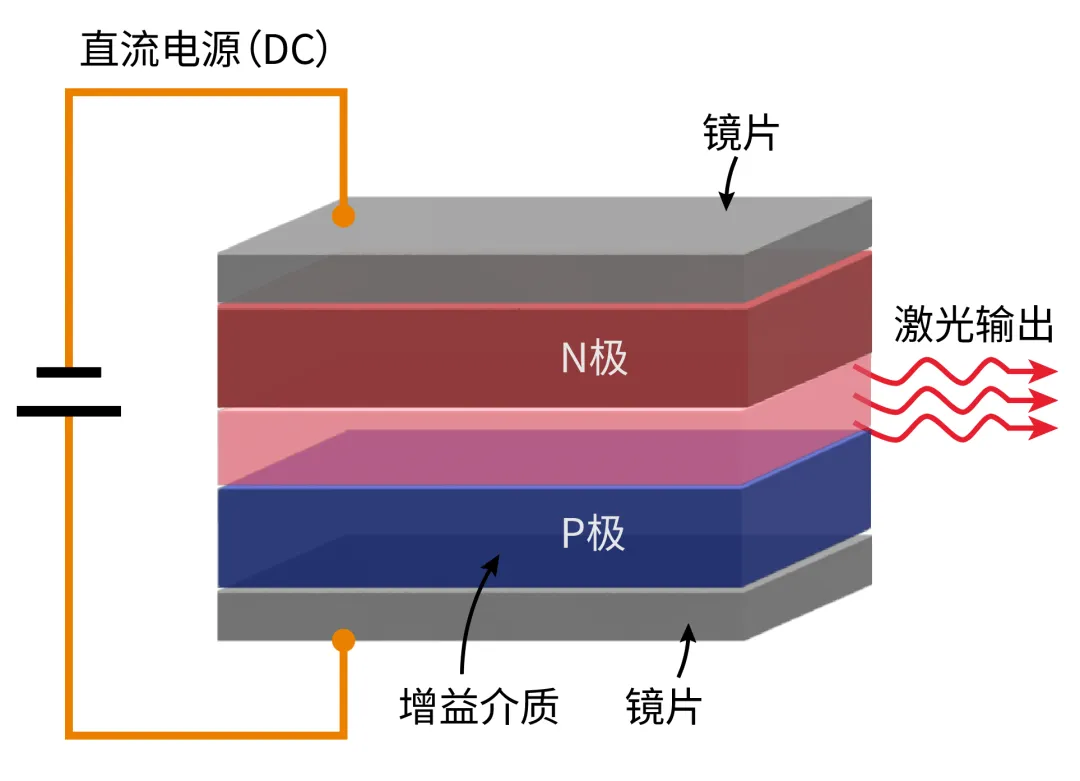
Semiconductor lasers use electronic band structure and a PN junction or heterostructure:
- GaAs/AlGaAs: approximately 780–850 nm, used in optical storage, communications, and solid-state-laser pumping;
- InGaAsP/InP: 1.3–1.55 µm, matching the low-loss windows of silica optical fiber;
- GaN/InGaN: blue and green output for optical storage, projection, and solid-state lighting.
Semiconductor lasers are small, light, durable, inexpensive, and can exceed 50% electrical-to-optical efficiency. Their output is directly modulated by current, making them one of the most widely produced and widely used laser classes.
Fiber gain media
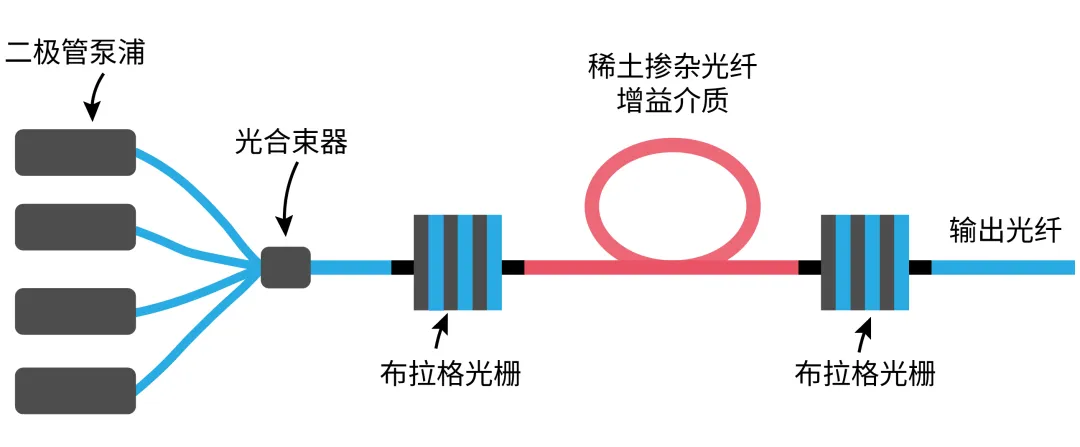
A fiber laser is a specialized solid-state laser whose gain medium is a rare-earth-doped optical fiber, often with a double-clad structure:
- Ytterbium-doped fiber: operates around 1–1.1 µm and dominates high-power industrial cutting and welding;
- Erbium-doped fiber: operates near the 1.55 µm communications band and forms the basis of erbium-doped fiber amplifiers.
The fiber is both gain medium and waveguide. Its long, thin geometry provides efficient heat removal, while core guidance supports near-diffraction-limited beam quality and high conversion efficiency. Fiber lasers are therefore well suited to applications requiring both high power and high beam quality.
Pumping mechanisms
Pumping injects external energy into the gain medium, moves particles from low to high energy levels, and creates and maintains population inversion. The output energy ultimately comes from the pump; the gain medium converts and amplifies it.
In continuous operation, the pump rate must replace particles lost from the upper level through spontaneous emission and other channels. The minimum pump power required for gain to overcome total loss and initiate oscillation is the pump threshold.
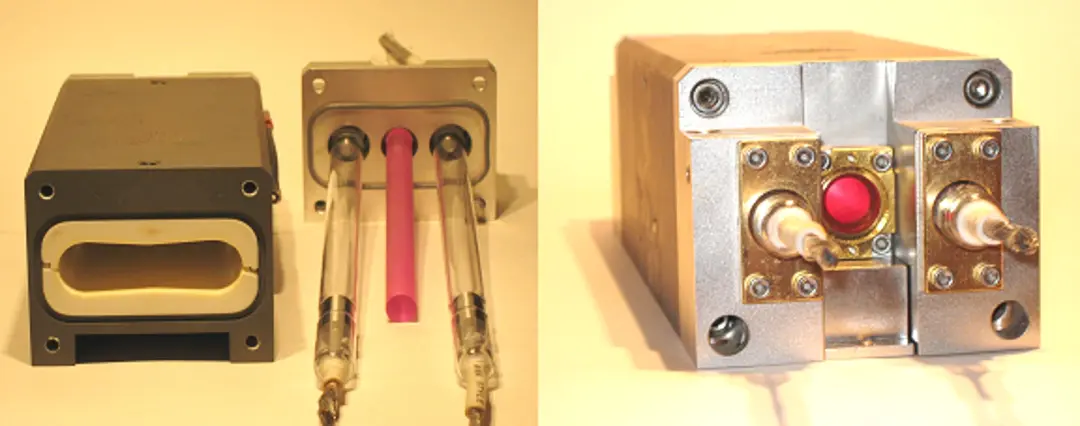
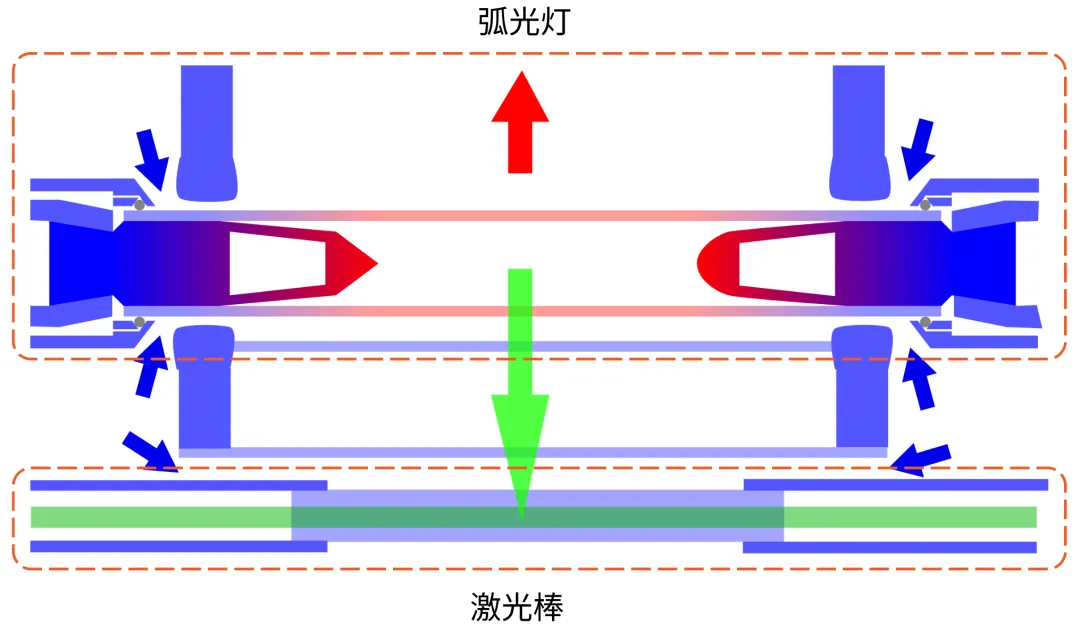
Optical pumping
Optical pumping excites the medium with intense light. The pump wavelength must fall within the absorption spectrum of the active species; better spectral matching produces higher efficiency.
- Flashlamp or arc lamp: broad spectrum, low cost, and high pulse energy, historically important for high-energy pulsed solid-state lasers. Only a fraction of the spectrum is absorbed, so much of the energy becomes waste heat;
- Laser diode: emission can be matched closely to an absorption peak, raising efficiency and reducing waste heat. Diode-pumped solid-state lasers use this advantage to replace flashlamps.
Optical pumping is required for electrically insulating gain media such as crystals, glasses, fibers, and liquid dyes.
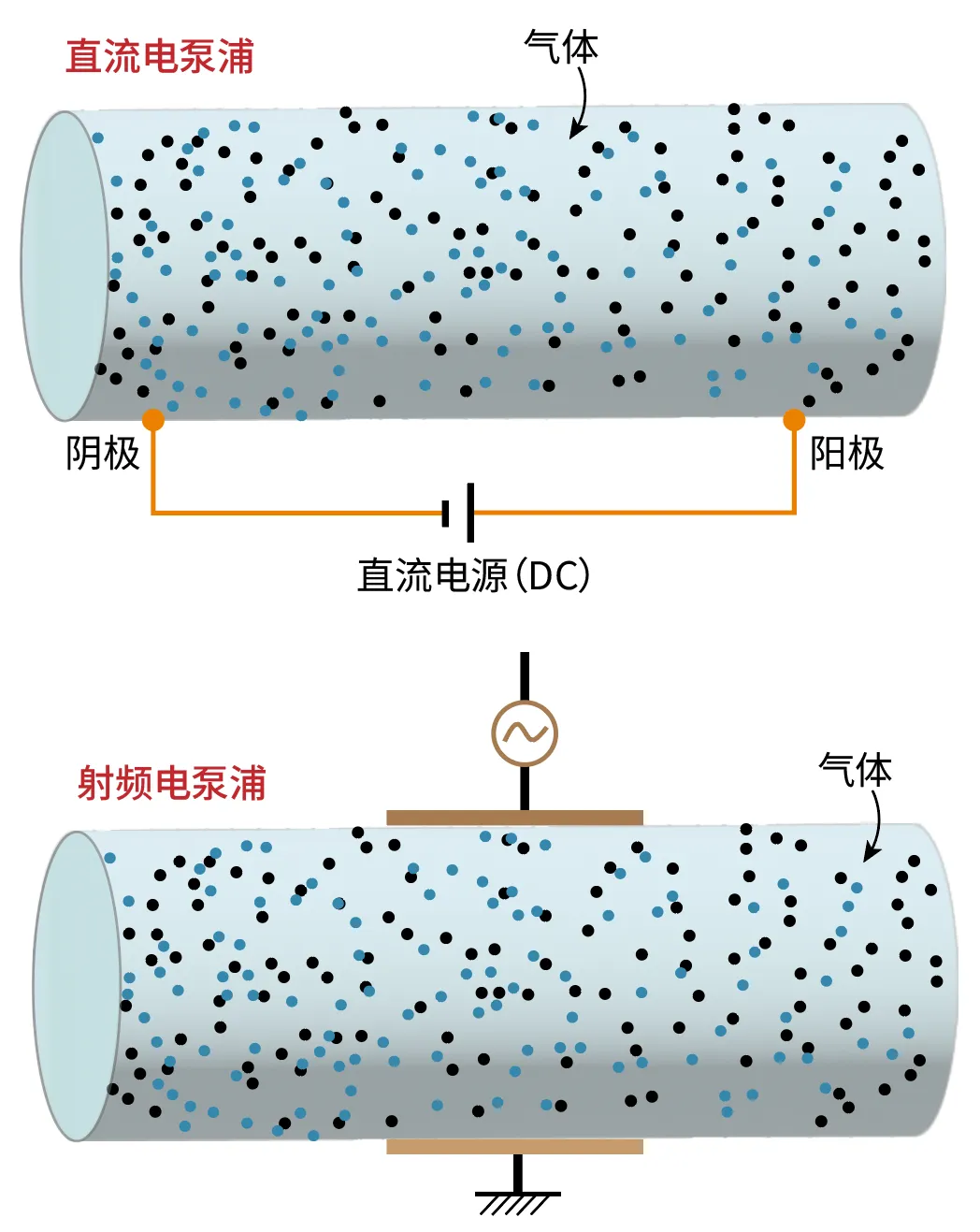
Electrical pumping
Electrical pumping uses current or an electric field to excite conductive media and is common in gas and semiconductor lasers.
- Gas discharge: high voltage ionizes a gas into plasma. Electrons accelerate in the field and transfer kinetic energy to atoms or molecules through inelastic collisions. In He–Ne lasers, excited helium transfers energy resonantly to neon;
- Current injection: forward bias injects electrons from the N region and holes from the P region into the active region. Their radiative recombination converts electrical energy directly into photons and establishes inversion.
Special pumping methods
- Chemical pumping: an exothermic reaction directly creates excited products. In HF/DF chemical lasers, hydrogen or deuterium reacts with fluorine to create vibrationally excited HF or DF. Such systems can produce very high continuous power or pulse energy without a conventional electrical supply and are used mainly in specialized or military systems;
- Thermal pumping: gas mixtures such as \(\mathrm{N_2}\) and \(\mathrm{CO_2}\) are heated to high temperature and pressure and then expanded rapidly through a de Laval nozzle. Different vibrational relaxation rates “freeze” the upper-level population while the lower level empties, creating inversion at high power.
The pump must match the medium
The medium’s electrical properties and absorption spectrum determine the appropriate pump:
- insulating Nd:YAG cannot be excited by direct current and therefore requires optical pumping;
- gas absorption lines are generally narrow, making broad-spectrum flashlamps inefficient compared with gas discharge;
- semiconductor band structures and PN junctions naturally support compact, efficient current injection.
Optical resonators: amplification and beam formation
The gain medium and pump can form an optical amplifier. The resonator transforms that amplifier into a self-sustaining, self-organizing optical oscillator.
An optical resonator consists of two or more highly reflective mirrors surrounding the gain medium. It confines light to a selected path and makes it traverse the gain medium repeatedly.
Two core functions
- Positive optical feedback: photons traveling along the optical axis are reflected back through the gain medium and trigger further stimulated emission. Repetition causes the intracavity photon population and intensity to rise rapidly;
- Mode selection: interference occurs during each round trip. Only frequencies and directions that return with self-consistent phase and satisfy standing-wave conditions build constructively; other fields decay. This selection creates high monochromaticity and directionality.
The simplest linear resonator has two facing mirrors:
- High reflector (HR): reflectivity as close to 100% as practical;
- Output coupler (OC): typically 90%–99.9% reflective, preserving feedback while transmitting part of the field as useful output.
Common resonator geometries
Plane-parallel cavity: two plane mirrors with \(R_1=R_2=\infty\), giving \(g_1=g_2=1\). It is marginally stable, highly sensitive to angular misalignment, and can have significant diffraction loss. Its simplicity remains useful in short semiconductor cleavage cavities and microcavities.
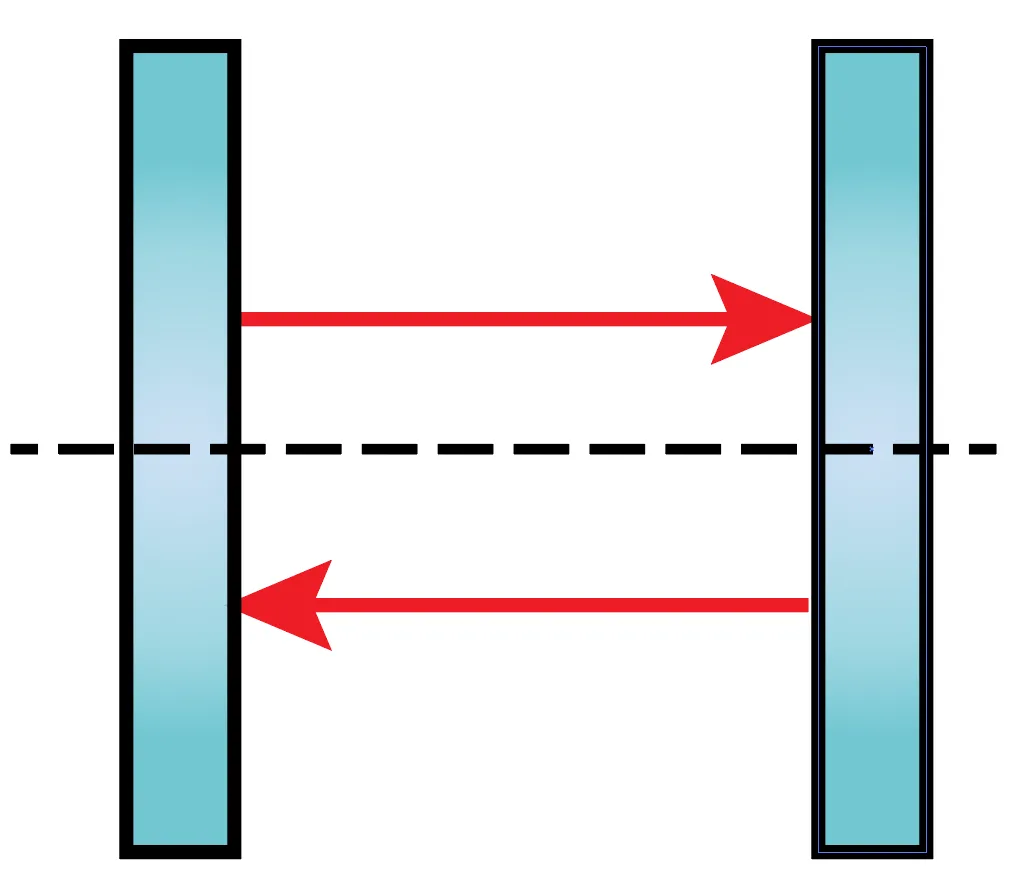
Confocal cavity: two concave mirrors with \(R_1=R_2=L\), so their focal points coincide. It is stable, has low diffraction loss, and is relatively easy to align, making it useful for clean transverse modes and high beam quality.
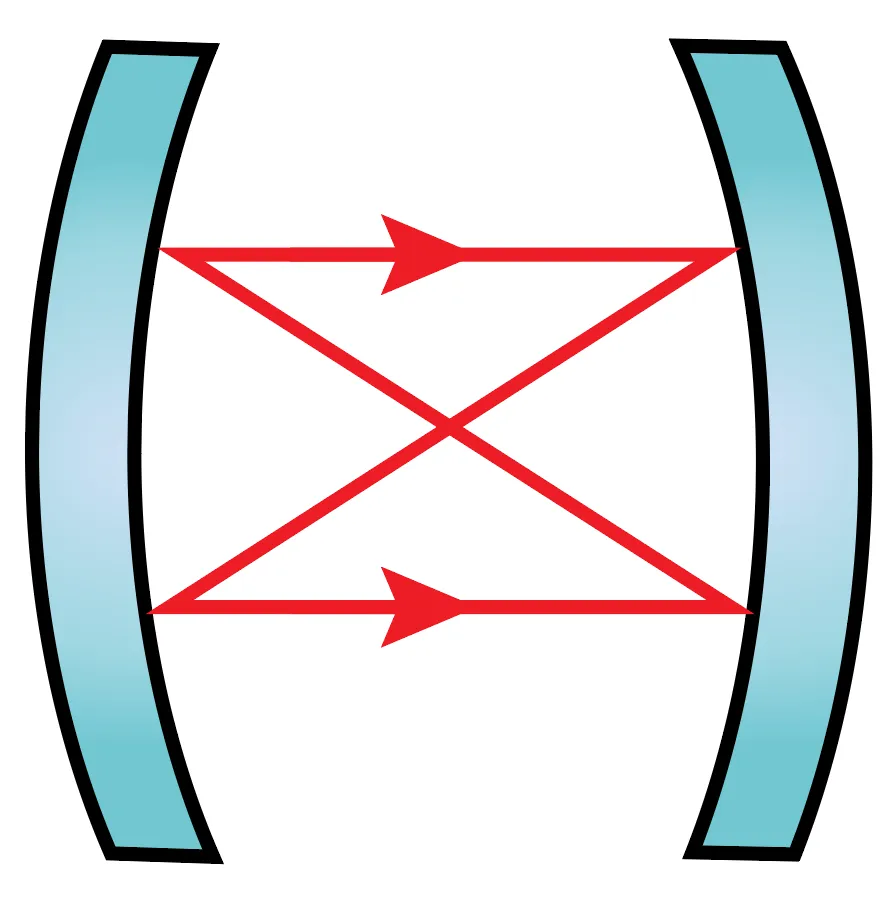
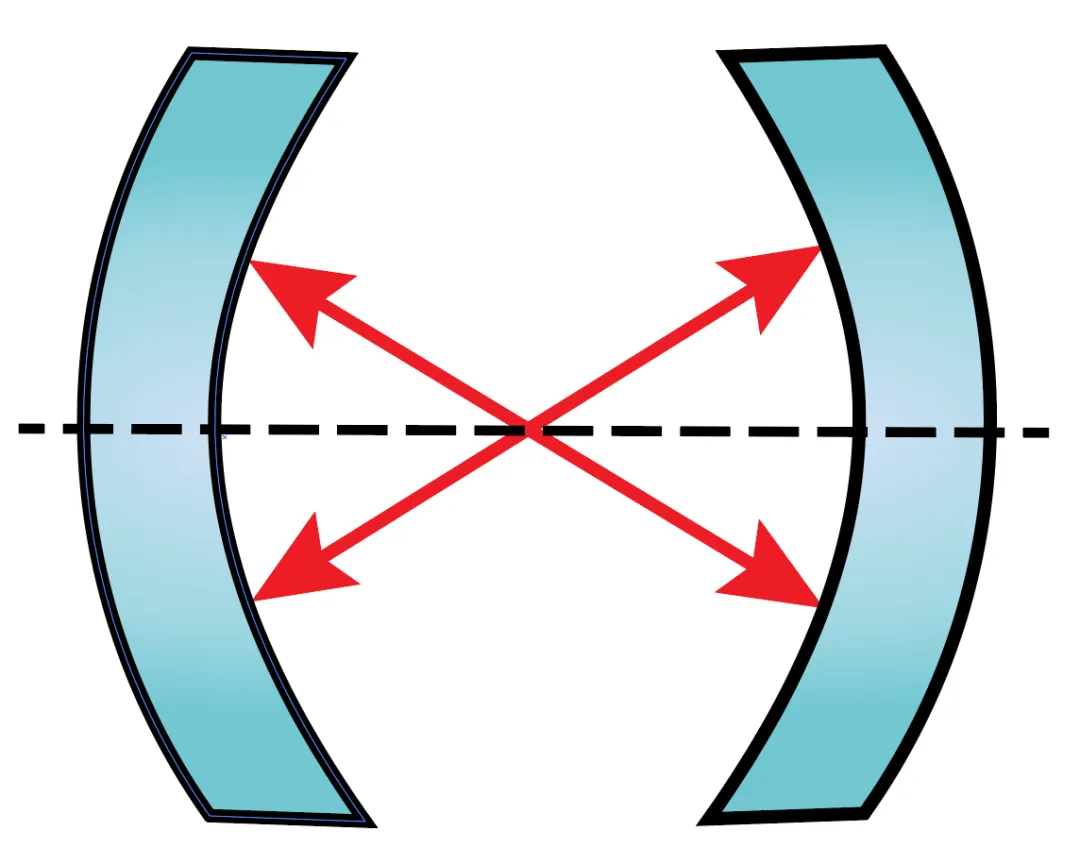
Concentric cavity: two concave mirrors with \(R_1=R_2=L/2\), or \(L=2R\), so their centers of curvature coincide. It is also marginally stable. The beam forms a very small waist at the center and large spots at the mirrors, but alignment tolerance is limited.
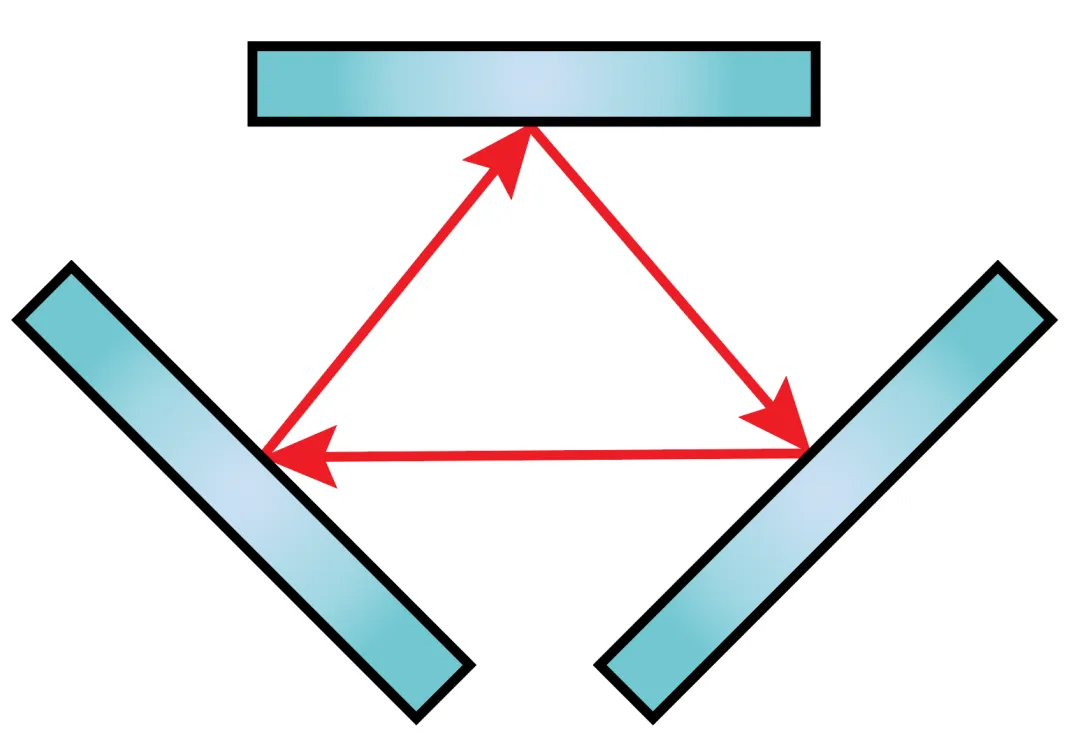
Ring cavity: three or more mirrors form a closed path in which light circulates in one or both directions. Unidirectional operation avoids the standing-wave spatial hole-burning effect, making stable single-longitudinal-mode and narrow-linewidth operation easier. It also avoids direct back-reflection along the input path.
| Resonator | Geometry | Stability | Main characteristics | Typical uses |
|---|---|---|---|---|
| Plane-parallel | \(R_1=R_2=\infty\) | Marginal | Alignment-sensitive, higher diffraction loss, simple construction | Semiconductor cleavage cavities, microlasers |
| Confocal | \(R_1=R_2=L\) | Stable | Low diffraction loss, clean modes, easier alignment | Laboratory and high-beam-quality lasers |
| Concentric | \(R_1=R_2=L/2\) | Marginal | Large mirror spots, strong central focus, alignment-sensitive | Specialized designs; often avoided as a standalone choice |
| Ring | Closed path with three or more mirrors | Stable | No spatial hole burning in unidirectional operation, easier single-frequency output | Stable single-frequency lasers and laser gyroscopes |
Longitudinal and transverse modes
The stable optical-field distributions selected by a resonator are laser modes.
Longitudinal modes: frequencies along the cavity axis. Stable wavelengths satisfy
\[ L=q\frac{\lambda}{2} \]so practical output may contain a set of discrete, closely spaced longitudinal frequencies rather than one absolute frequency;
Transverse modes: intensity and phase distributions across the beam, written \(\mathrm{TEM}_{nm}\). The indices count nodes along two orthogonal directions. The fundamental \(\mathrm{TEM}_{00}\) mode is Gaussian, concentrated, and has the best beam quality; higher-order modes form lobes or rings and generally diverge more strongly.
Resonator design is always a trade-off. High power may require a larger mode volume and perhaps an unstable resonator at some cost to beam quality. Extreme frequency stability may require a more complex ring cavity.
The complete laser-generation process
The three components cooperate to transform disordered energy into organized laser radiation:
A flashlamp, laser diode, or high-voltage source continuously injects energy into the gain medium.
Particles accumulate in a metastable state until they outnumber particles in the lower laser level.
Spontaneous emission creates the first random, incoherent seed photons.
Axial seed photons cross the inverted medium repeatedly and trigger stimulated emission.
The cavity preserves phase-consistent longitudinal and transverse modes.
When gain exceeds mirror, absorption, scattering, and transmission losses, light exits through the output coupler.
Only a small fraction of spontaneously emitted photons initially travel along the resonator axis. These photons become seeds. They reflect between the mirrors and pass repeatedly through the inverted medium, creating identical photons at each pass. The resonator rejects fields that do not satisfy the phase condition and preserves the stable longitudinal and transverse modes.
When round-trip gain exceeds all cavity losses, oscillation is established. A portion of the coherent intracavity field passes through the output coupler as a stable, collimated laser beam.
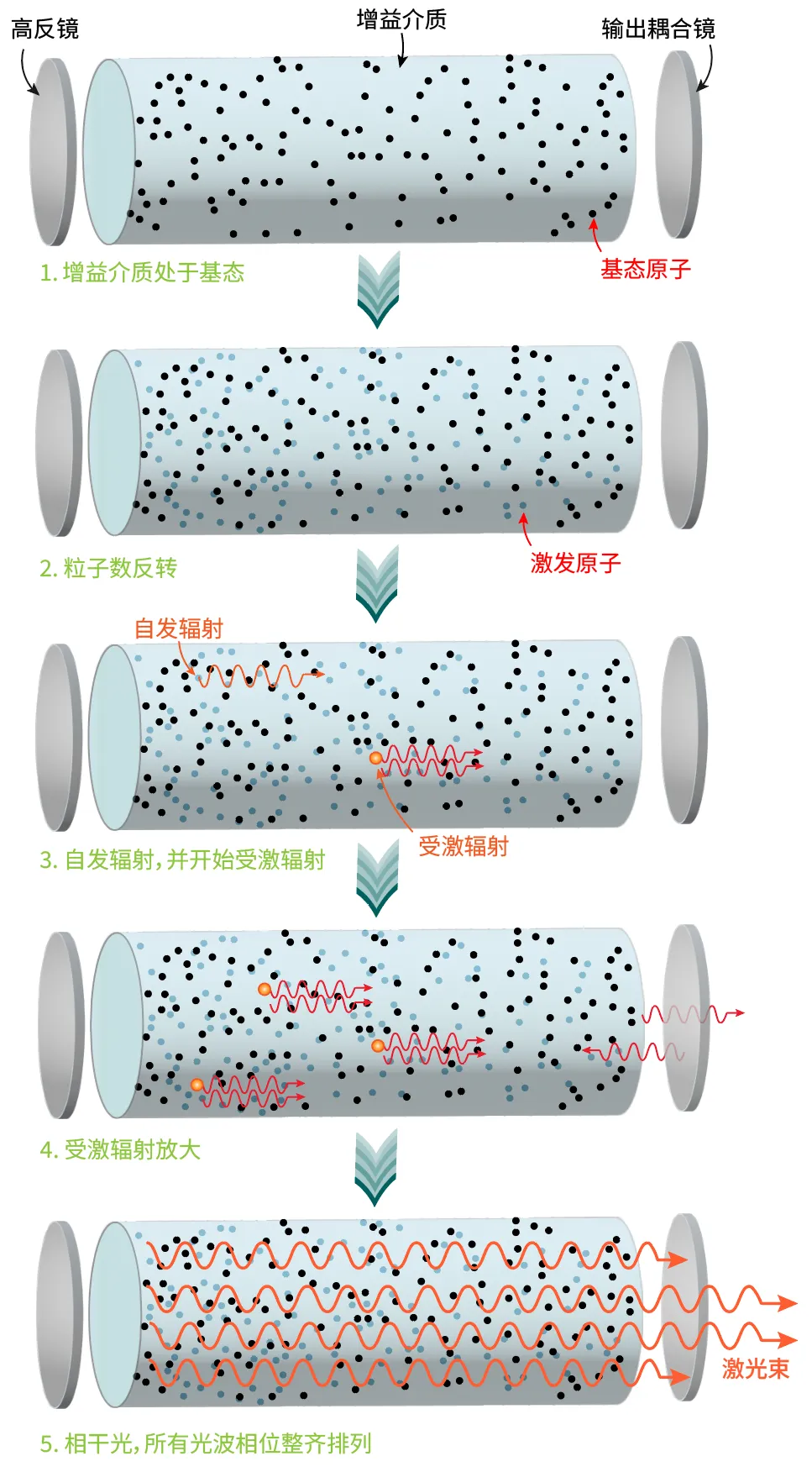
This is a classic self-organization process from disorder to order: random spontaneous photons evolve, under boundary conditions and positive feedback, into a highly organized coherent optical state.
Conclusion
- The gain medium is the source and amplifier of light; its energy-level structure determines the fundamental output wavelength;
- The pump source is the energy engine that creates population inversion;
- The optical resonator is both feedback amplifier and shaping structure, producing avalanche-like amplification while selecting the modes that give the beam monochromaticity, coherence, and directionality.
In compact form: the pump activates the gain medium; the resonator then uses that gain, positive feedback, and mode selection to turn weak spontaneous emission into a macroscopic laser beam.
It begins in randomness and ends in order.
References
- Ruby laser, Wikimedia Commons.
- Optical pumping, Wikipedia.
- Laser Gain Media, MEETOPTICS Academy.
- Critical Laser Components, Newport.
- What is Inside a Laser, Chemistry LibreTexts.
The Chinese original was published by “Laser Insights” on July 2, 2025, at 07:45 in Chongqing. View the original