For Q345R pressure-vessel steel, one laser platform can first remove rust with pulsed irradiation and then switch to continuous-wave Inconel 625 cladding. The cleaning pass also leaves useful residual heat, turning surface preparation, preheat, and metallurgical repair into a shorter, safer, and measurable process chain.
Q345R steel Inconel 625 Cleaning–cladding integration Pressure-vessel repair
Remove oxide and create approximately 14 µm roughness.
Raise the plate to about 136 °C before deposition.
Deposit Inconel 625 as a metallurgically bonded repair layer.
Application background
Q345R pressure vessels in petrochemical and energy systems operate under heat, corrosion, and cyclic loading. Surface-crack probability increases with service time, and an unplanned shutdown of a cyclone separator or similar large vessel interrupts a continuous production system as well as the repair operation itself.
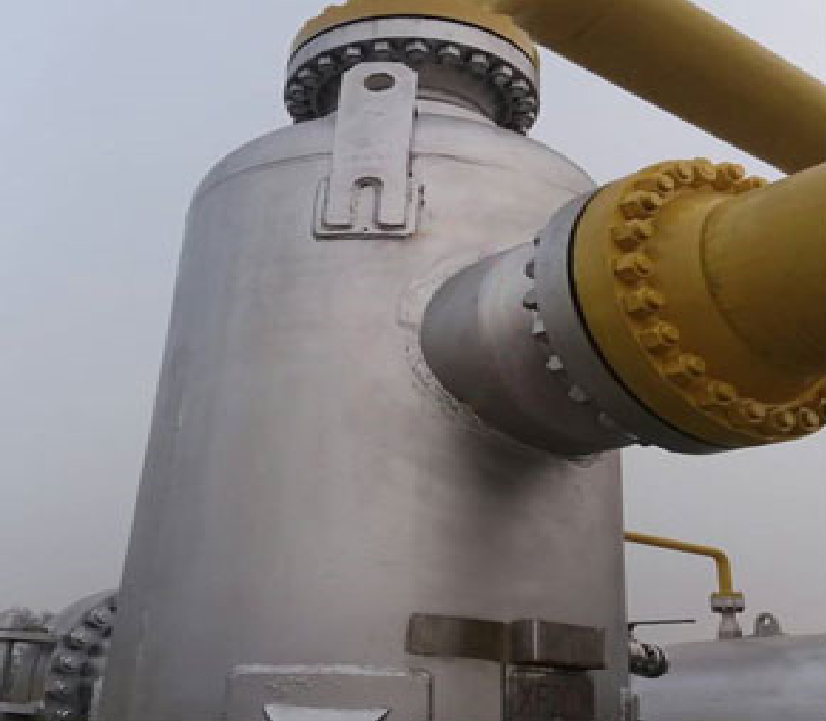
The conventional sequence—manual grinding followed by arc repair—has compounding drawbacks:
- long operation time and preparation quality dependent on operator skill;
- risk of substrate overheating or an unnecessarily wide HAZ;
- dust, heat, fall, and access hazards during elevated manual work;
- larger quality variation with personnel and site condition.
An effective repair method must reduce downtime, remove high-risk manual work, and convert surface condition, heat input, and repair quality into measurable and traceable variables. The cleaning–cladding process links precision rust removal, useful preheat, and metallurgical restoration in one coordinate system.
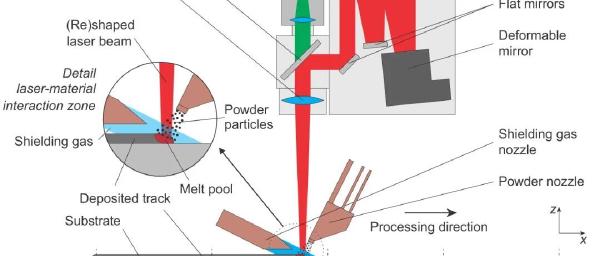
One laser platform, two process modes
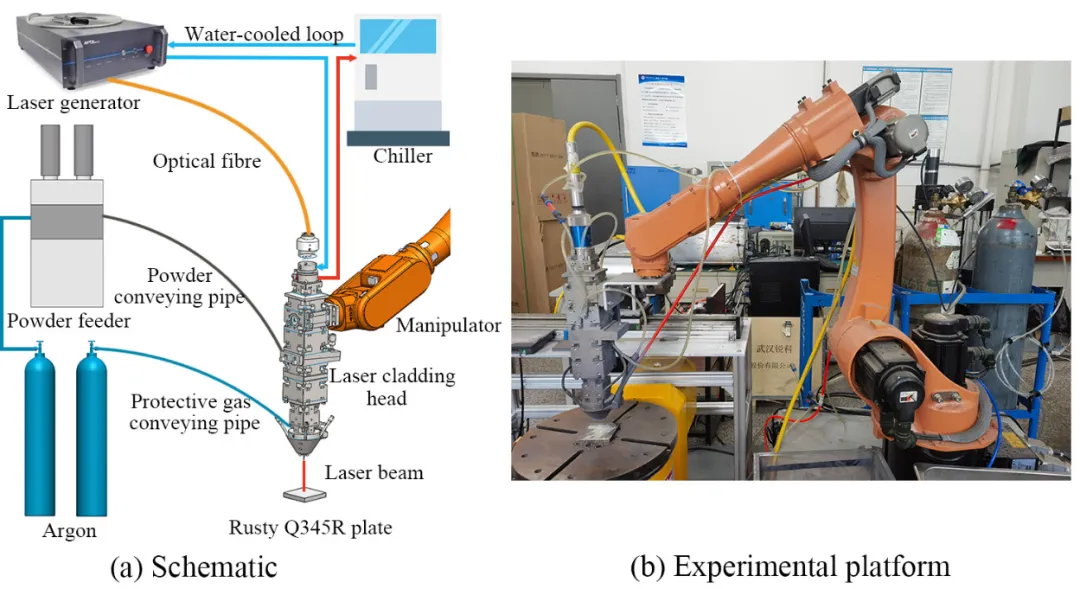
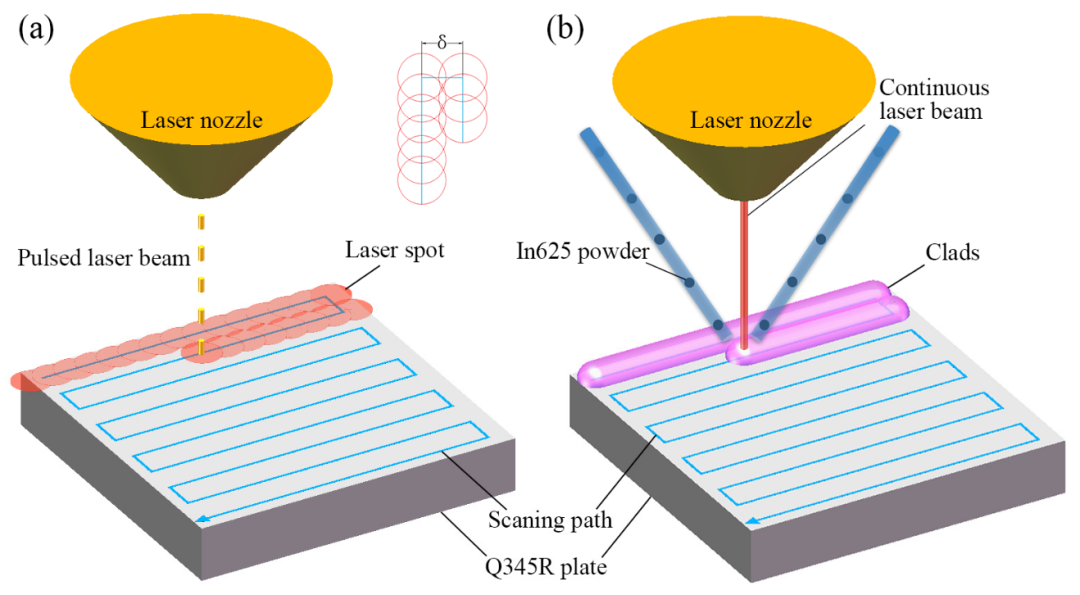
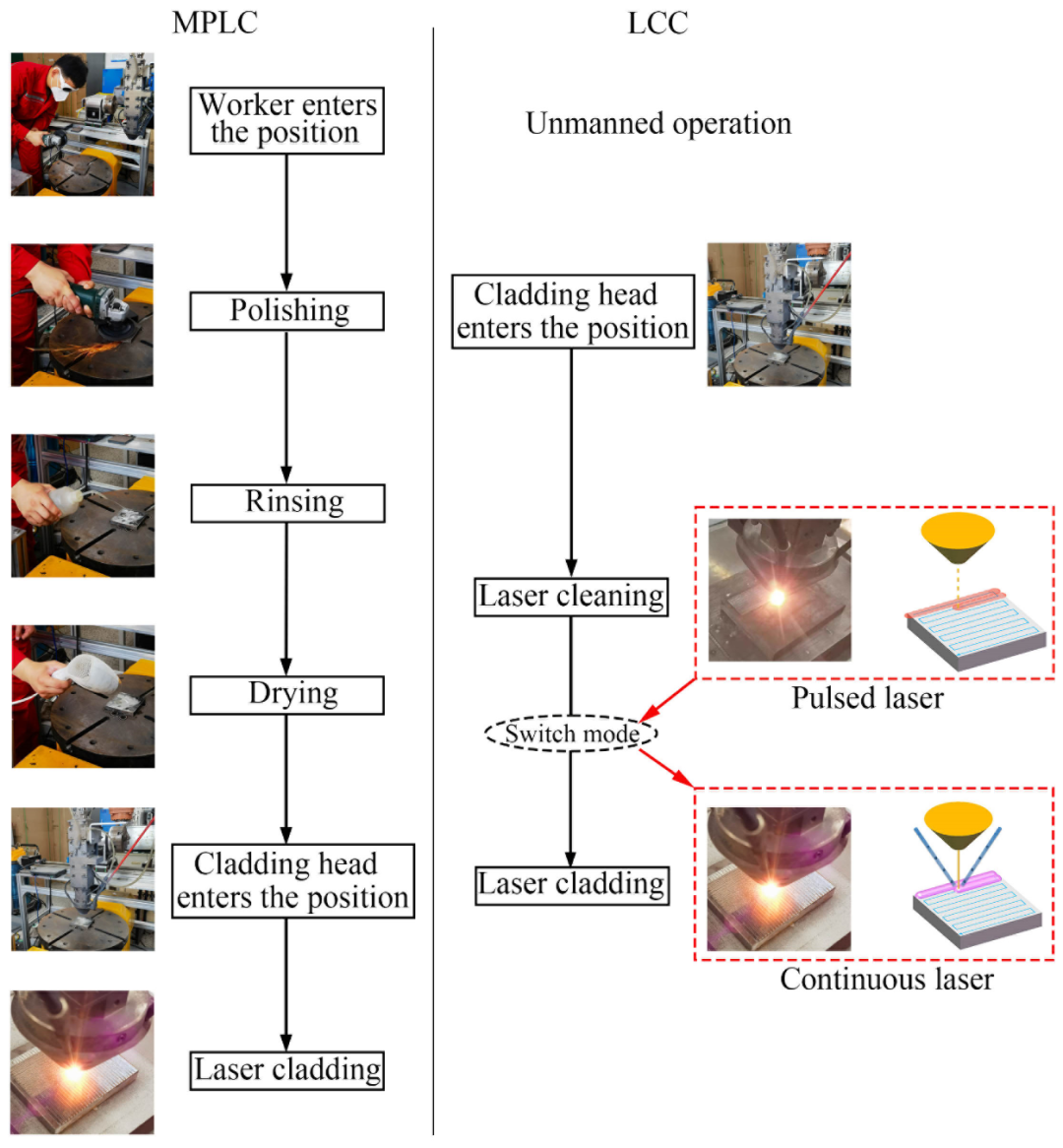
The central innovation is switching operating mode and parameters without changing the platform or work coordinate. This avoids the equipment, location, and alignment changes of manual grinding followed by a separate deposition operation.
Cleaning: remove rust and engineer the interface
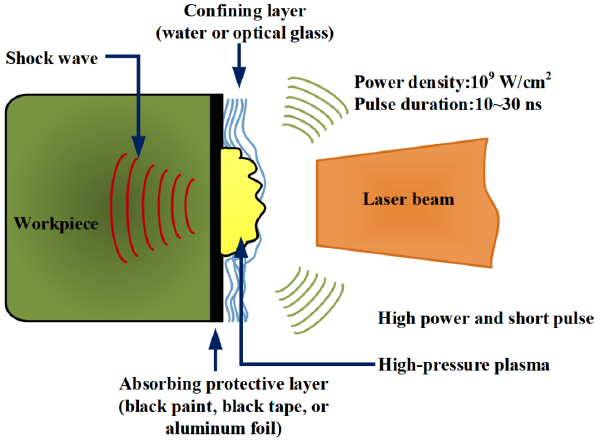
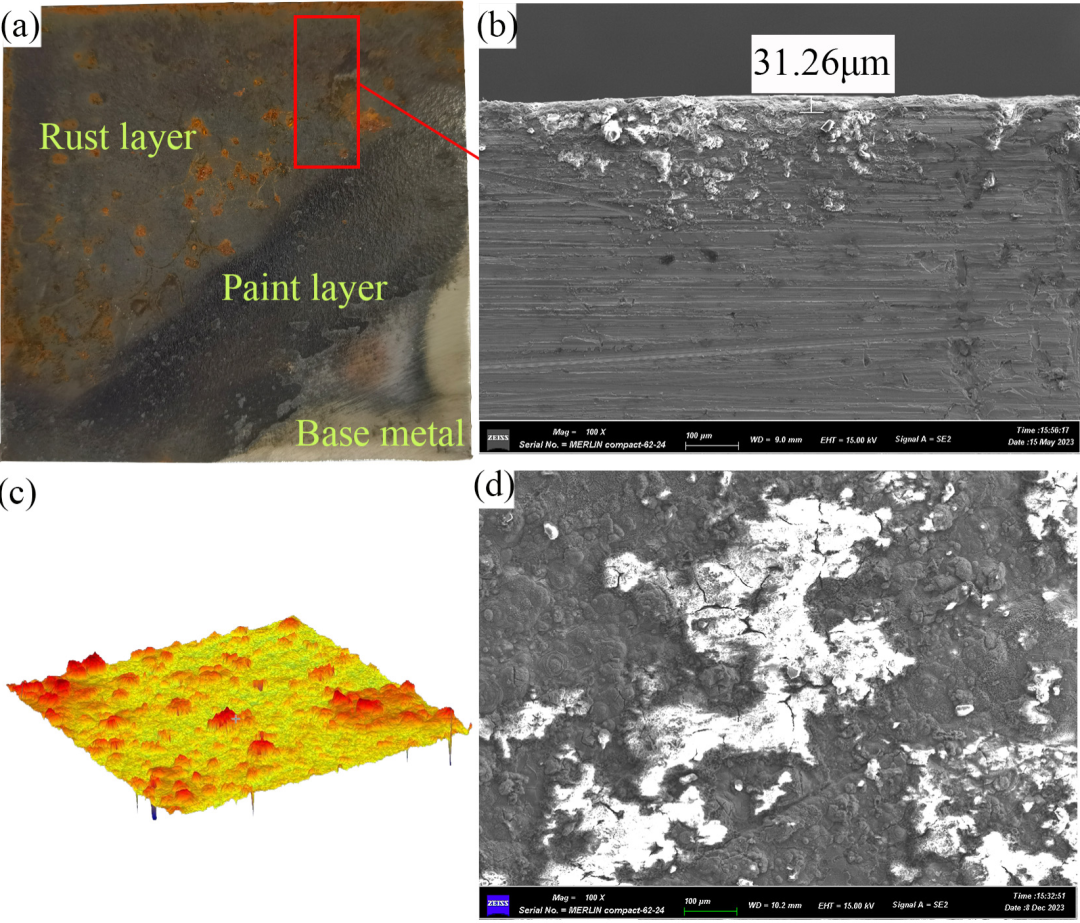
Cleaning uses a 1000 Hz pulsed mode at 0.8 J/cm². Oxide vaporizes or spalls, and surface oxygen falls from 21.3% to 14.6%.
The target is not the smoothest possible finish. Roughness is deliberately held near 14 µm so that real contact area and mechanical interlocking support the subsequent metallurgical deposition.
Cladding: use cleaning heat as preheat
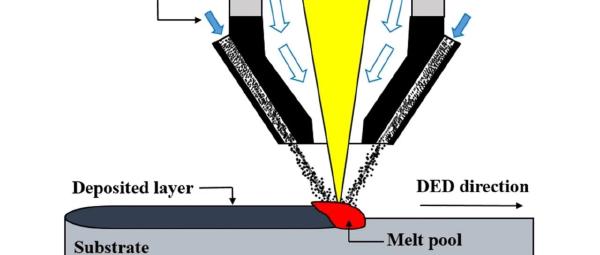
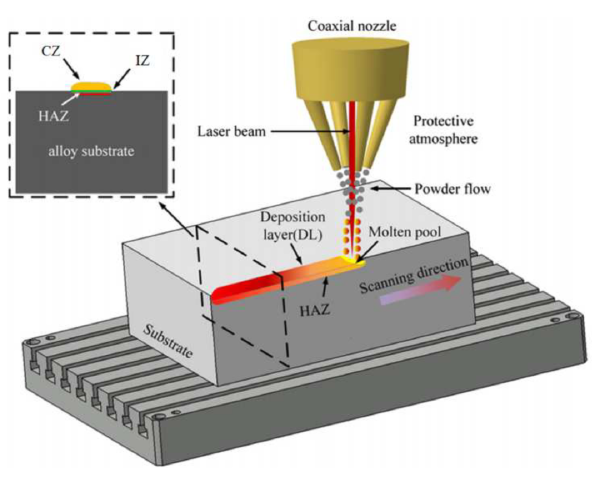
The system switches to a 2800 W continuous laser with a 3 mm spot and deposits Inconel 625 powder.
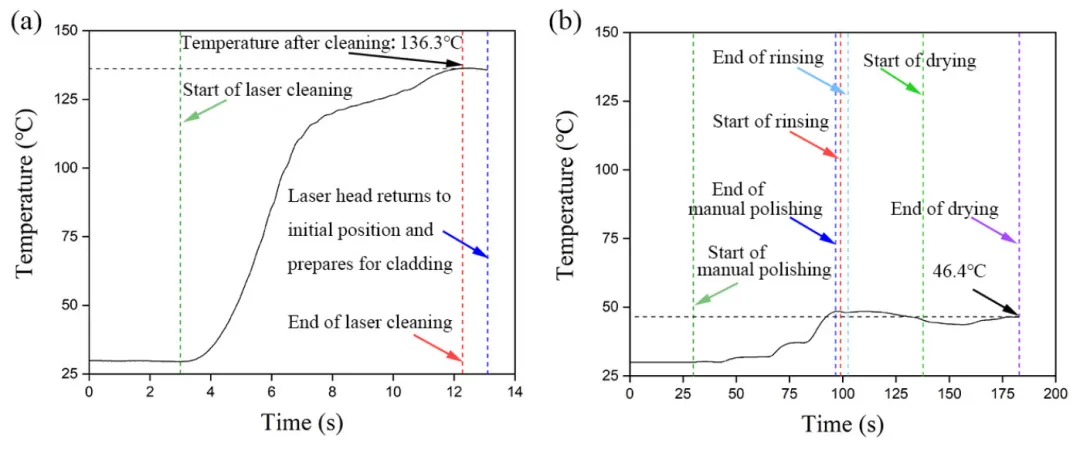
Cleaning leaves heat in the plate. The measured temperature reaches approximately 136 °C, acting as a built-in preheat and eliminating a separate conventional heating step.
Cleaning pulse frequency
Cleaning fluence
Continuous cladding power
Cladding spot diameter
Plate temperature after cleaning
Cladding powder
Why it outperforms manual preparation in the experiment
Surface condition and bond strength
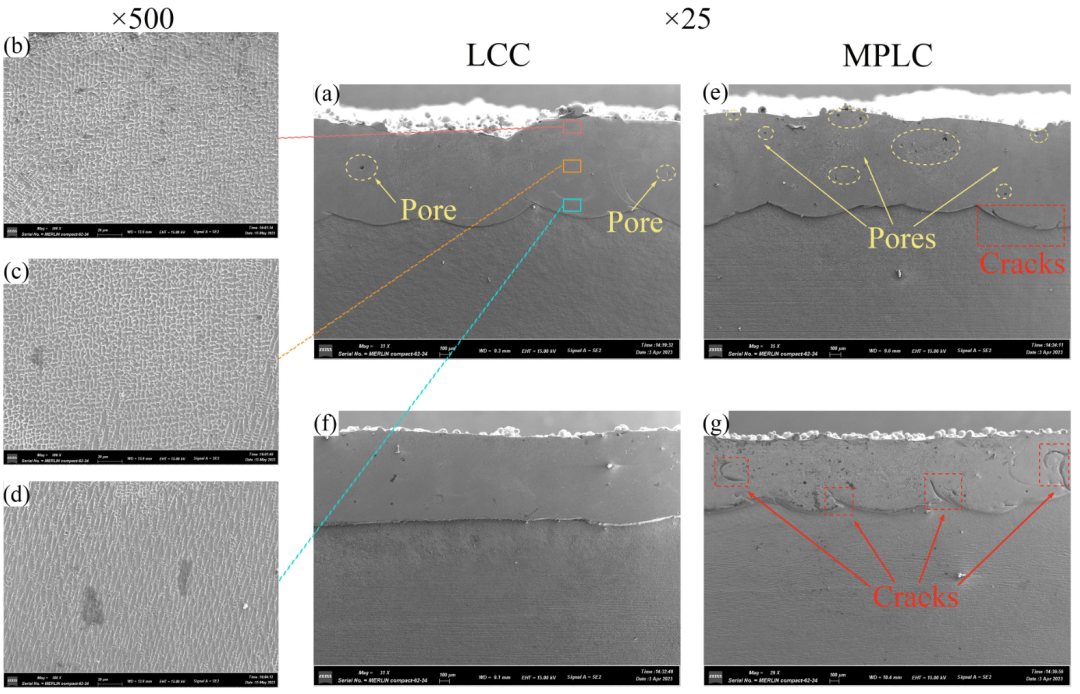
Laser-cleaned roughness is 14.22 µm, compared with 7.09 µm after manual grinding. Under the reported conditions, the laser-cleaned substrate produces 37% higher bond strength.
Roughness has an upper limit. Above approximately 18 µm, deep valleys can trap gas during cladding and increase porosity.
Hardness, toughness, and anisotropy
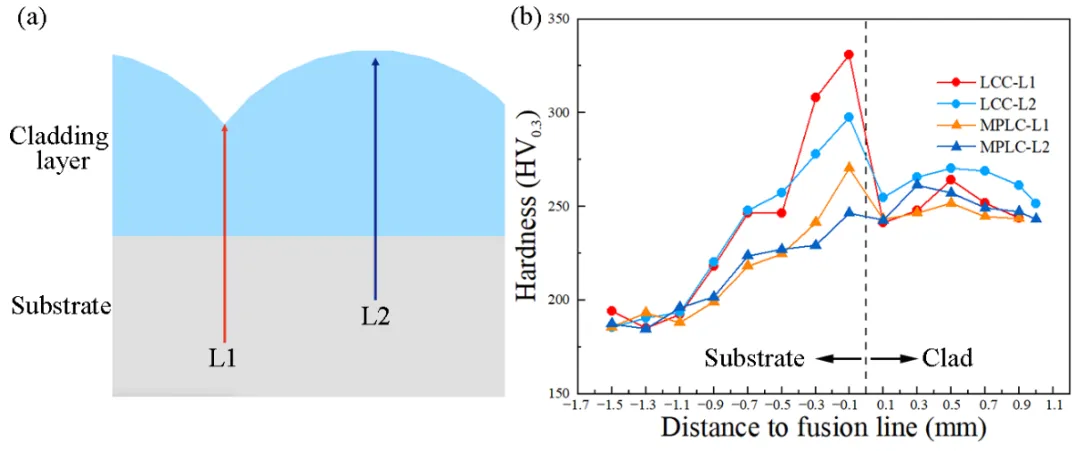
- Hardness: the clad reaches 256 HV, 37% above the Q345R substrate, mainly because of Cr₂₃C₆ carbides.
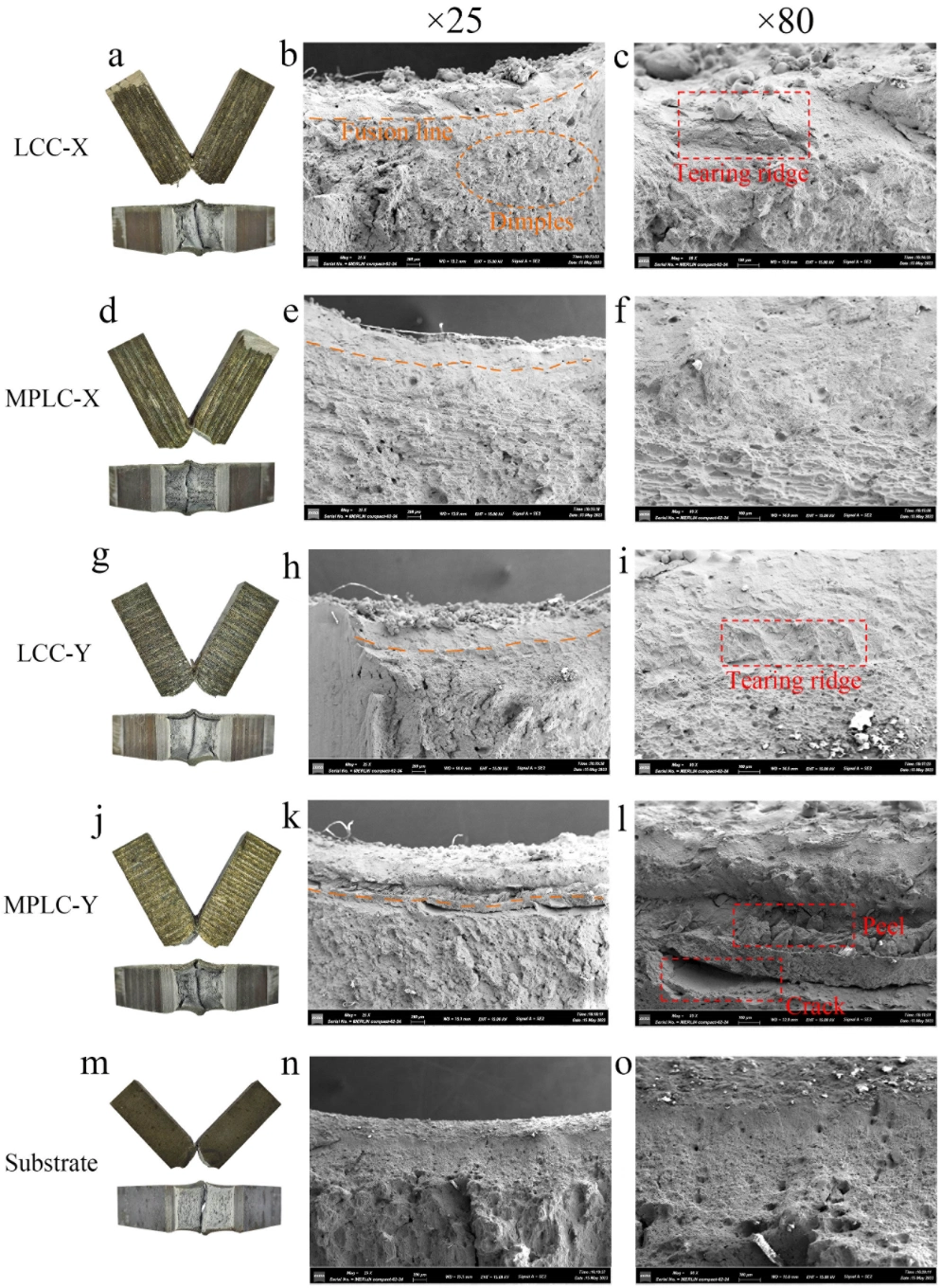
- Impact toughness: X-direction impact energy reaches 164 J, 5.8% above the substrate; the Y direction reaches only 138 J, showing path-related anisotropy.
- Pressure test: the specimen passes 28 MPa, but only for 10 minutes. This is a short proof test, not a substitute for the applicable pressure-vessel standard.
Ambient temperature remains an uncovered variable
All experiments were conducted at 25 °C. A summer site above 40 °C may leave a starting temperature higher than 136 °C after cleaning, increasing reoxidation or excessive heat input.
Residual cleaning heat is therefore both an advantage and a process variable. Field use must measure ambient temperature, initial plate temperature, cleaning path, and delay time before cladding.
Engineering value and limitations
Advantages
- Shorter process: the sequence is reduced from six steps to three.
- Improved safety: manual dust generation, elevated work, and hot operations are reduced.
- Repair quality: porosity remains below 1%, and the sample passes the 28 MPa, 10-minute pressure test.
Limitations
Idealized geometry: the study uses flat coupons. Real vessel curvature changes incidence, focus, and energy density and may cause cleaning, preheat, and deposition to vary along the path.
Maintenance: dust can contaminate protective optics. Undetected contamination reduces delivered power and invalidates the calibrated process window.
Limited validation: a 25 °C laboratory, flat specimen, and short pressure test do not represent long-term curved-vessel service under heat, corrosion, and cyclic pressure.
Suitable applications
- high-value nuclear, aerospace, and energy equipment where downtime and traceability justify equipment cost;
- confined spaces where a robot can carry the head into a pipe or vessel;
- environmentally constrained work where laser cleaning can replace blasting or large-scale manual grinding.
Flat plate, 25 °C, short pressure test, laboratory path
Curvature, orientation, ambient temperature, optical contamination
Cost, reliability, site adaptability, and long-term code compliance
Source material
- Fan, K.; Shi, Y.; Xu, Y.; Wang, S.; Wang, Q.; Li, Y.; Zhang, C.; Li, Z. Laser Cleaning Combined with Cladding Improves Cladding Quality for Repairing Steel Plates in Pressure Vessels. Coatings 2024, 14, 508.
- DOI: 10.3390/coatings14040508
This page is for technical study. Engineering use must follow the primary paper, applicable pressure-vessel codes, and component-level validation.