Laser cladding is a process family for repair, surface enhancement, and directed-energy deposition. This guide connects its metallurgical basis, complete workflow, coupled parameters, defect mechanisms, and the engineering decision between laser cladding, PTA, thermal spray, arc hardfacing, and hard chrome.
Introduction
Wear, corrosion, and fatigue commonly limit high-value metal components. Conventional repair may introduce excessive heat, distortion, or weak coating adhesion. Replacing an entire component creates high cost and long downtime.
Laser cladding (LC) deposits one or more high-performance alloy layers while minimizing damage to the underlying part. The deposited material and a shallow portion of the substrate melt together and solidify into a strong metallurgical bond. The same physical process supports precision repair, surface enhancement, and layer-by-layer metal manufacturing.
Four engineering questions organize this article:
How can localized high-energy heating create strong bonding with limited distortion?
How do beam, feedstock, substrate, preparation, and postprocessing form a qualified component?
How do power, speed, spot size, and feed rate jointly determine geometry, dilution, structure, and defects?
When is LC preferable to PTA, thermal spray, arc hardfacing, or hard chrome?
Principles and core advantages
How the process works
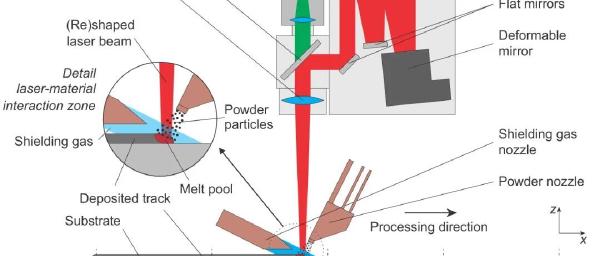
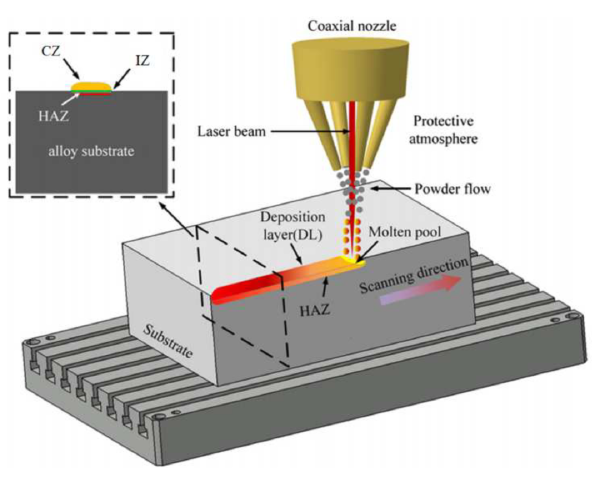
One laser-cladding pass can be divided into six steps:
- Localized heating: a high-power-density laser irradiates a selected region.
- Melt-pool formation: a shallow portion of the substrate melts into a small moving pool.
- Feedstock delivery: powder or wire is directed into the interaction zone.
- Melting and mixing: the feedstock melts and mixes with a controlled amount of substrate.
- Rapid solidification: as the beam moves away, conduction into the component removes heat quickly.
- Layer formation: a continuous alloy layer remains metallurgically fused to the substrate.
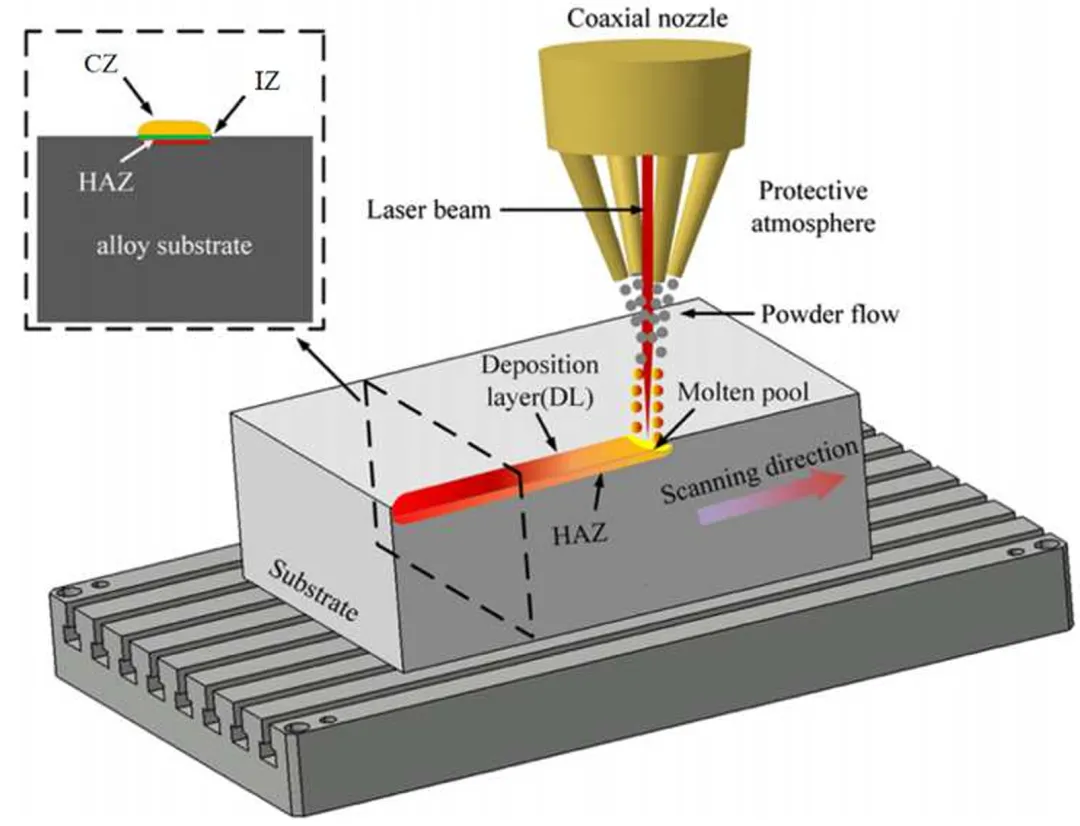
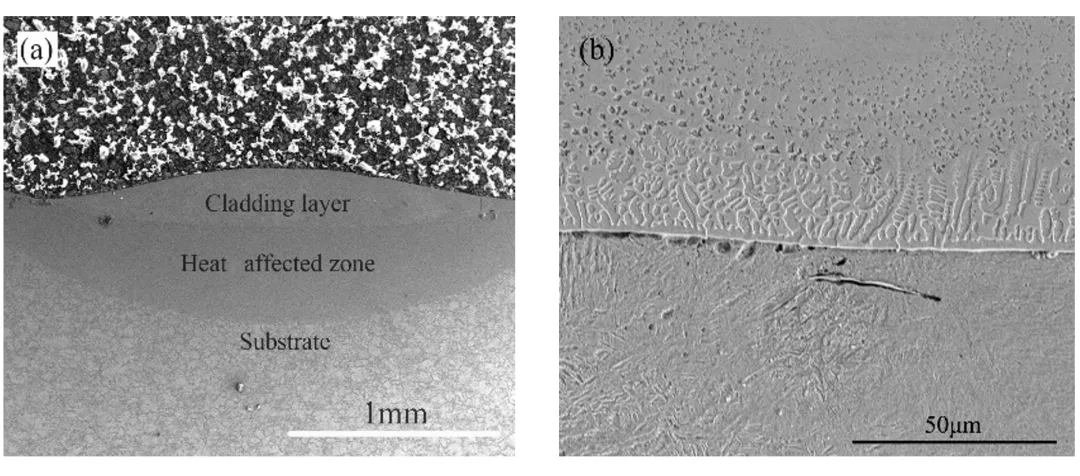
The decisive feature is metallurgical bonding. Atomic diffusion and fusion occur across the interface, so bond strength can approach that of the substrate itself and the risk of delamination is much lower than for coatings based mainly on mechanical interlocking.
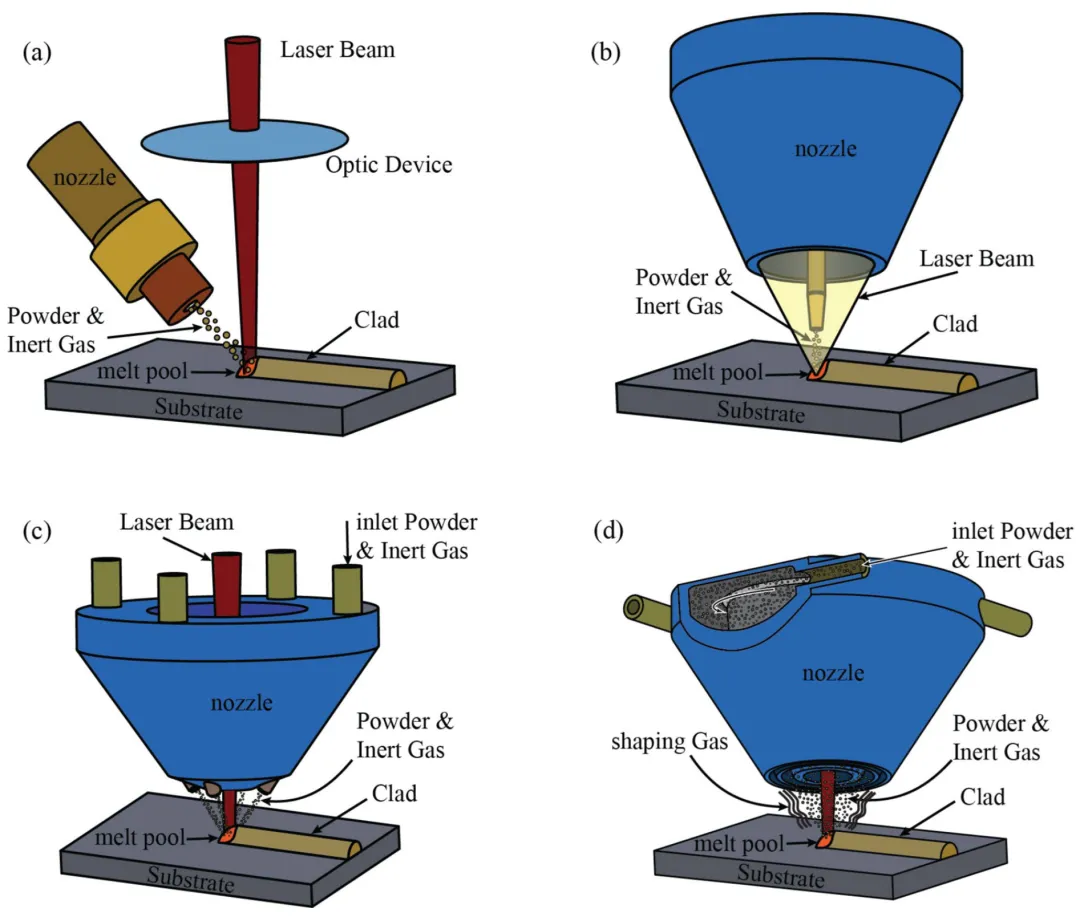
Powder may be delivered laterally, through a ring-shaped “light-around-powder” configuration, or by discrete or continuous coaxial “powder-around-light” nozzles.
Three application domains
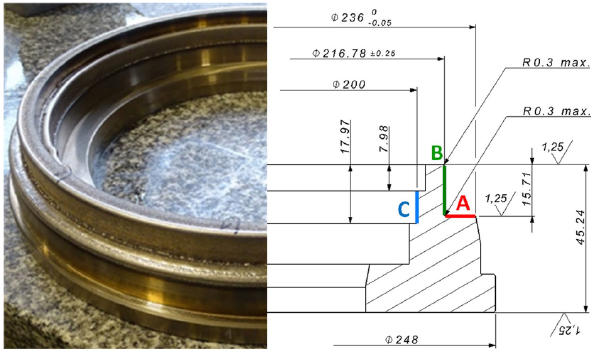
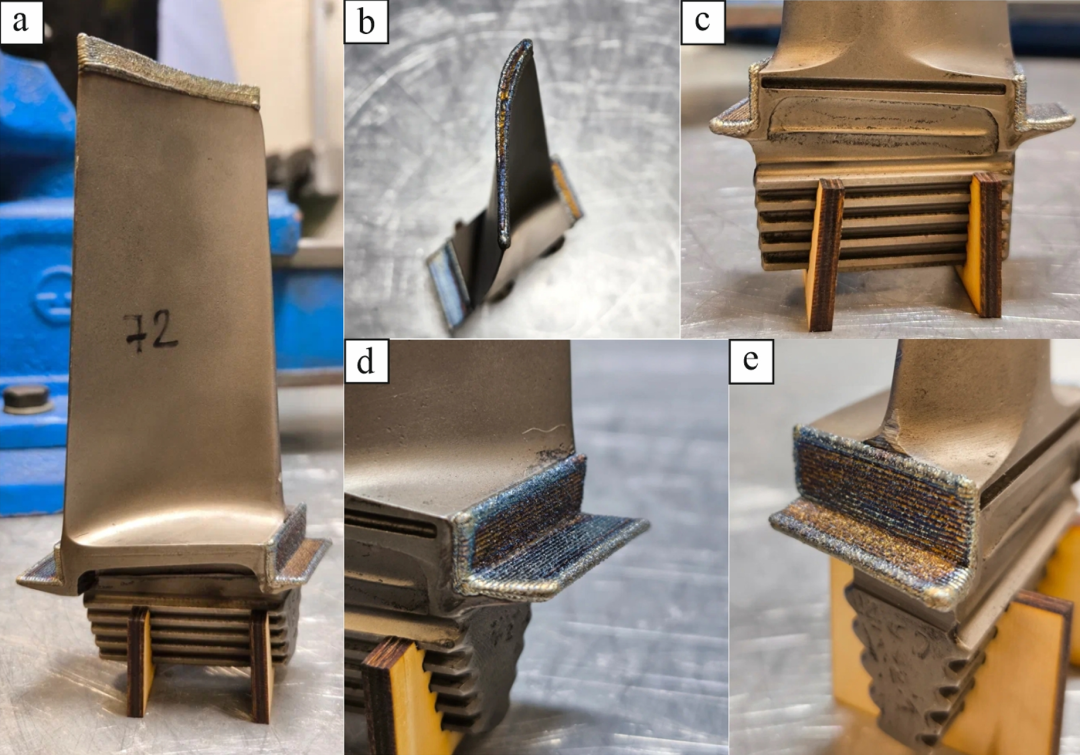
- Repair and remanufacture: restore worn, corroded, or fatigue-damaged turbine blades, dies, shafts, and other high-value parts.
- Surface enhancement: place a hard, wear-resistant, corrosion-resistant, or high-temperature layer on a lower-cost substrate without changing the entire component.
- Additive manufacturing: build metal geometry from a CAD model or add features to an existing component.
Melt flow and rapid solidification
Laser cladding is not simply material stacking. Melt-pool convection and solidification determine chemistry, grain structure, and quality.
Marangoni convection arises because laser heating creates surface-temperature gradients and therefore surface-tension gradients. The resulting flow mixes feedstock and substrate elements but can also destabilize the pool.
Cooling rates can reach
\[ 10^3\text{–}10^6\ \mathrm{K/s}. \]This strongly nonequilibrium solidification produces:
- grain refinement: limited growth time creates fine cellular and dendritic structures, commonly raising hardness and strength through Hall–Petch strengthening;
- nonequilibrium phases: supersaturated solid solutions, metastable phases, and sometimes amorphous structures can form and improve hardness, strength, or corrosion resistance.
Core advantages
- Low heat input and narrow HAZ: concentrated energy and short interaction time reduce total component heating, warpage, and distortion.
- Low dilution: only a thin substrate layer needs to melt. Substrate content in the clad can often remain below 10%, and optimized processes may reach below 5%, compared with more than 20% for some hardfacing routes.
- High density and bond strength: well-controlled deposits can exceed 99.9% density and remain strongly fused to the substrate.
- Material and process flexibility: steels, superalloys, titanium alloys, and other weldable metals can be processed. Multiple powder streams can generate compositionally graded materials, and the head integrates readily with CNC machines and robots.
LMD, DED, and LC
- Laser Metal Deposition (LMD): a common process term emphasizing metal deposition by laser.
- Directed Energy Deposition (DED): the broader additive-manufacturing category covering focused-energy deposition processes.
- Laser Cladding (LC): emphasizes surface coatings, enhancement, and repair.
This article uses LC because surface engineering and repair are its main context.
Complete process workflow
Qualified laser cladding includes preparation, deposition, and postprocessing; it does not end when the beam switches off.
Preparation
Cleaning and surface preparation
Oil, rust, and oxide decompose or vaporize under the laser and can form pores and inclusions. Preparation therefore includes solvent cleaning, blasting or grinding, and complete removal of fatigued or cracked material in a repair zone.
Preheating
High-carbon steels, tool steels, and cast irons often require preheat. It lowers the difference between the melt pool and the bulk part, reduces thermal stress, slows cooling, and limits hard brittle martensite. The required temperature depends on composition, thickness, and geometry.
Powder drying
Moisture adsorbed by powder can cause pores and hydrogen-assisted cracking. Controlled drying is a routine prerequisite for dense deposits.
Deposition
Feedstock delivery
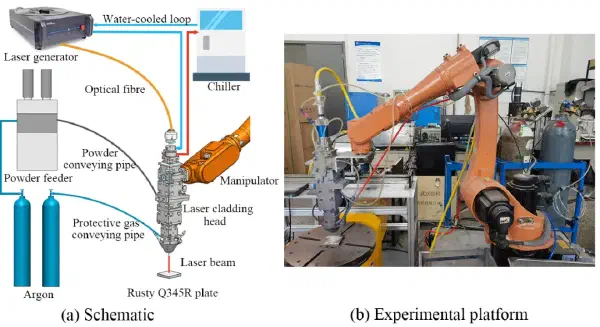
Powder feed is most common. In coaxial feed, powder converges around the beam and is insensitive to travel direction, making it suitable for complex paths. Lateral feed is simpler but direction dependent.
Wire feed offers nearly 100% material utilization, no airborne powder, a cleaner environment, and often lower feedstock cost. Its window is narrower because the wire tip, pool, and beam must remain coupled, and it is less adaptable to some fine geometries.
Pool control and shielding
The laser focus and powder convergence point or wire tip must coincide correctly at the surface. High-temperature metal reacts readily with oxygen and nitrogen, so high-purity argon or another inert gas protects the pool and HAZ from oxides, nitrides, inclusions, and pores.
Postprocessing
Heat treatment
Large gradients and rapid cooling create residual stress, often tensile. If it exceeds local strength, the part distorts or cracks.
- Stress-relief annealing heats below the transformation range, holds, and cools slowly so diffusion and microscopic plasticity reduce stress.
- Property-focused treatment may include quenching, tempering, solution treatment, or aging to tune hardness and toughness.
Finish machining
LC is near-net-shape, but the deposited surface still contains waviness and dimensional allowance. Precision parts generally require turning, milling, or grinding to meet final size and roughness.
Key parameters and coupling mechanisms
Quality depends on a coupled parameter set. The governing balance is:
Energy delivered per unit time must match feedstock mass and the heat required to melt it completely while limiting substrate melting.
Primary inputs
Laser power \(P\)
Increasing power generally raises pool temperature, depth, width, substrate melting, and dilution. Too little leaves unmelted particles and lack of fusion; too much increases dilution, vaporizes alloying elements, and coarsens the structure.
Spot size \(d\)
At fixed power, a smaller spot raises power density, commonly increasing depth and decreasing width. Spot size therefore controls aspect ratio and dilution.
Travel speed \(v\)
Higher speed shortens dwell time and lowers energy per area, generally reducing depth, width, height, and dilution. Excessive speed causes incomplete melting; very low speed overheats the pool. Speed also controls cooling rate and grain refinement.
Powder or wire feed \(\dot m\)
At fixed energy, a higher feed rate adds more material per unit length and raises layer height, but excessive feed produces trapped powder and lack of fusion.
Overlap ratio
In multitrack deposition, overlap is the fraction of one bead covered by the next. Too little leaves valleys; too much wastes material and accumulates heat. A common range is 30–50%. The next pass also reheats the previous one and may temper its structure and reduce stress.
Energy-density descriptors
Parameters must not be tuned independently. Higher power may increase dilution, but proportional speed increase can preserve a similar thermal window while increasing throughput.
Common engineering descriptors are
\[ E_l=\frac{P}{v}\qquad [\mathrm{J/mm}] \]and
\[ E_a=\frac{P}{v\,d}\qquad [\mathrm{J/mm^2}]. \]They couple power, speed, and spot size, but do not replace material-specific validation. Every substrate–feedstock combination has a process window within which geometry, chemistry, and defects remain stable.
Geometry, structure, properties, and defects
Geometry and dilution
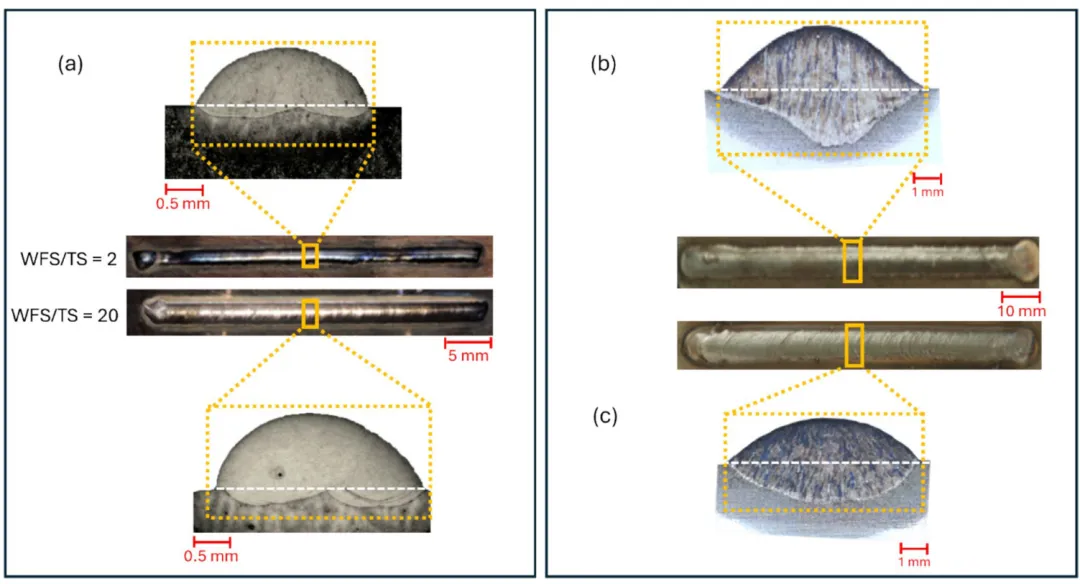
An ideal layer is smooth, wets the substrate correctly, and limits dilution, often toward 5% or less. A useful strategy is relatively high speed combined with enough power to melt the feed completely.
Microstructure
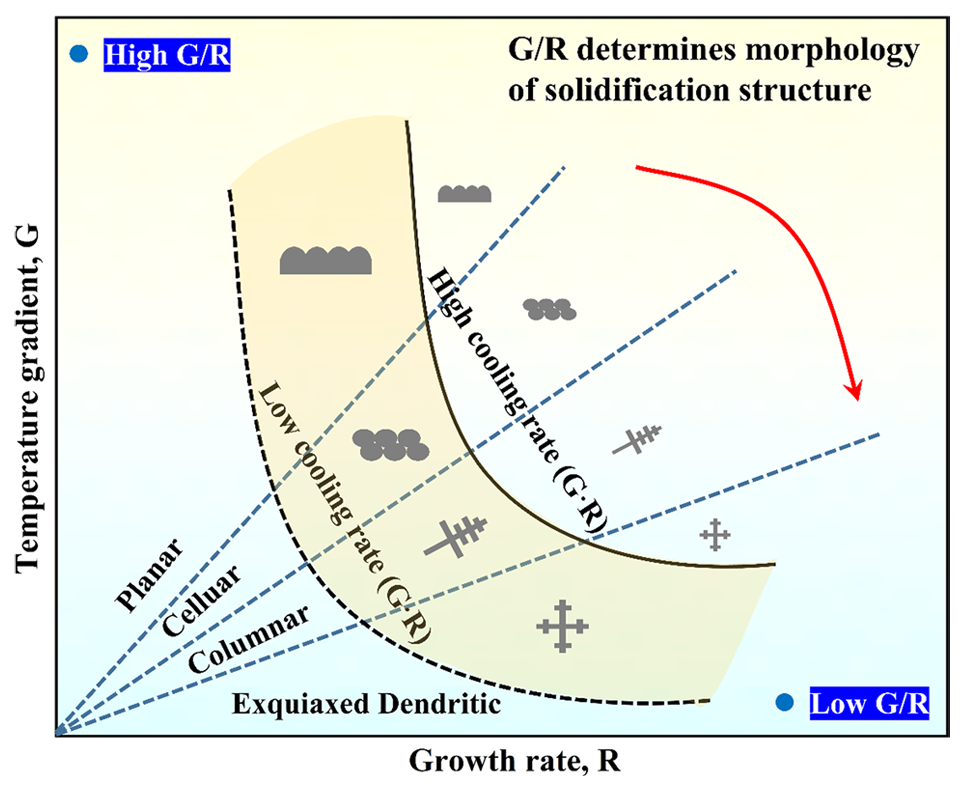
Thermal history determines structure. Speed strongly affects cooling rate; higher speed generally refines grains. Temperature gradient \(G\) and solidification rate \(R\) determine morphology. Power primarily changes \(G\), while speed strongly changes \(R\); their combination can move the structure from columnar to equiaxed growth.
Mechanical properties
Hardness depends on chemistry and refinement. Within the process window, faster cooling often raises hardness; excessive heat coarsens grains and increases substrate dilution, lowering it.
Cracking
Residual tensile stress is the primary driver. High heat input, extremely rapid cooling, poor scan strategy, and thermal-expansion mismatch all raise risk. Preheat, optimized energy, segmented scanning, and compatible transition layers are common controls.
Porosity
Pores originate from entrained shielding gas, hollow or moisture-contaminated powder, and inadequate or impure shielding. Control requires suitable carrier-gas flow, dry high-quality feedstock, and stable inert protection.
Comparison with other surface-engineering processes
The question is not which process is universally best, but which addresses the dominant constraint: precision and distortion, bond strength, heat sensitivity, cost, or throughput.
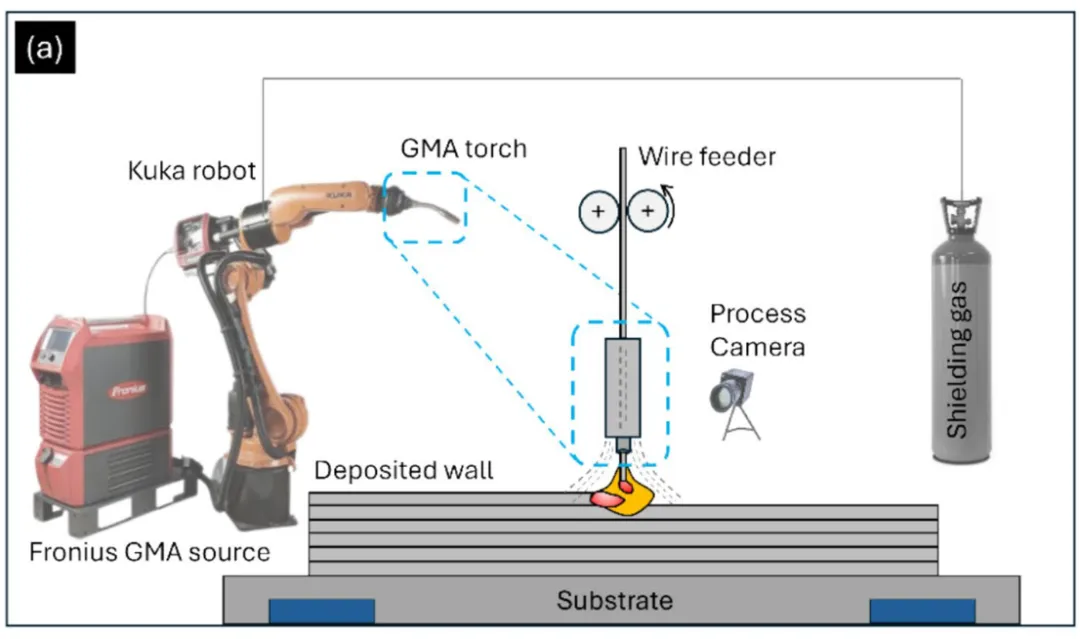
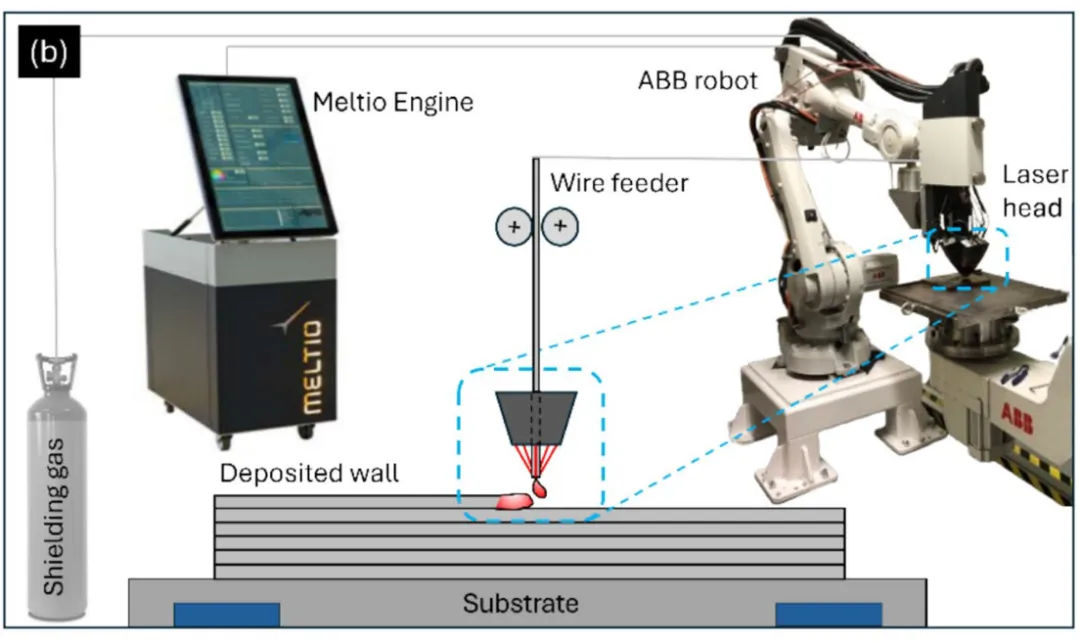
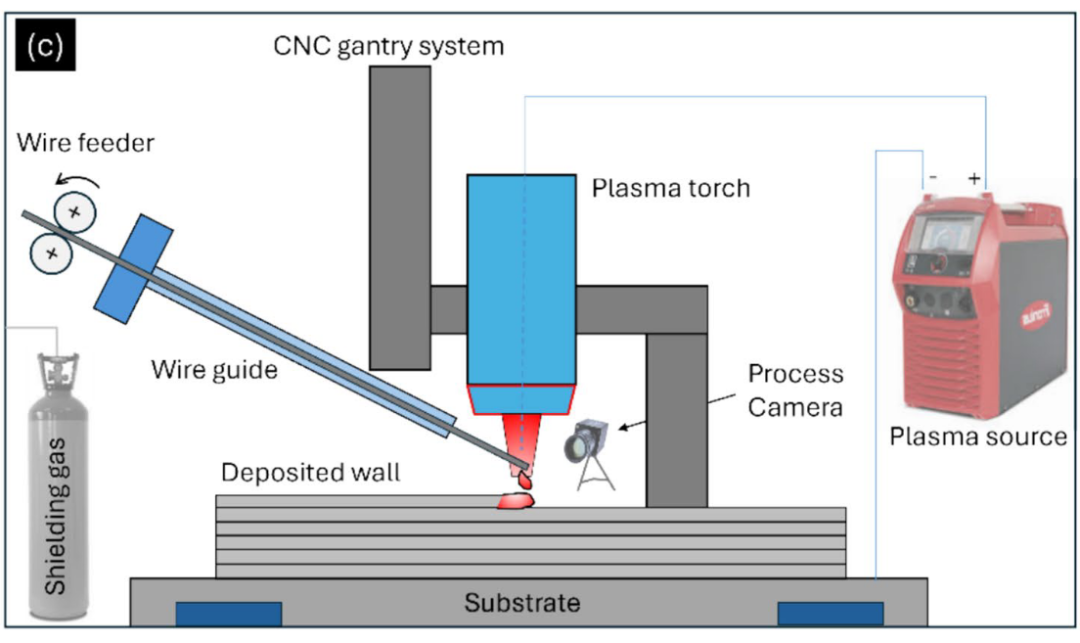
LC versus plasma transferred arc
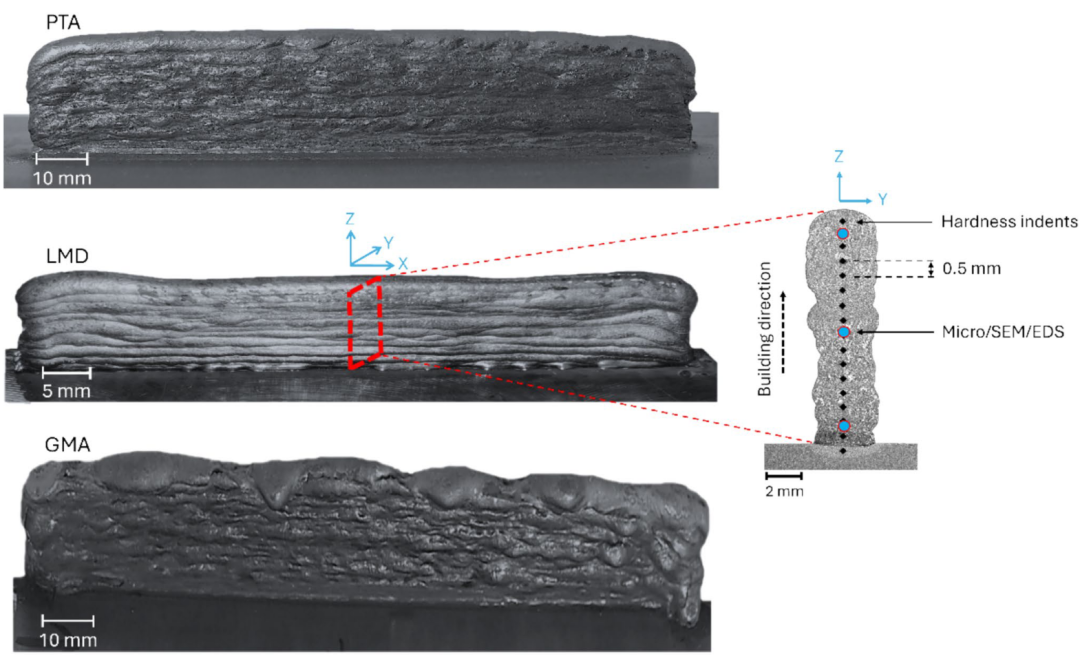
LC uses a concentrated, precisely positioned beam and generally produces lower total heat, a narrower HAZ, and less distortion. PTA distributes heat over a larger region and is often more economical for broad, thick deposits. LC dilution can remain below 5%, whereas PTA commonly reaches 10–20%. LC also offers finer positioning for narrow edges, grooves, and detailed repairs.
LC versus thermal spray
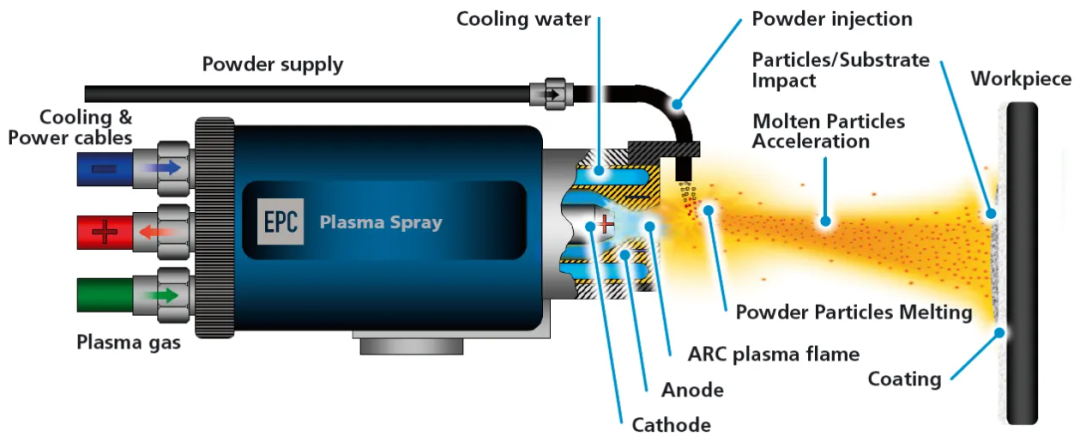
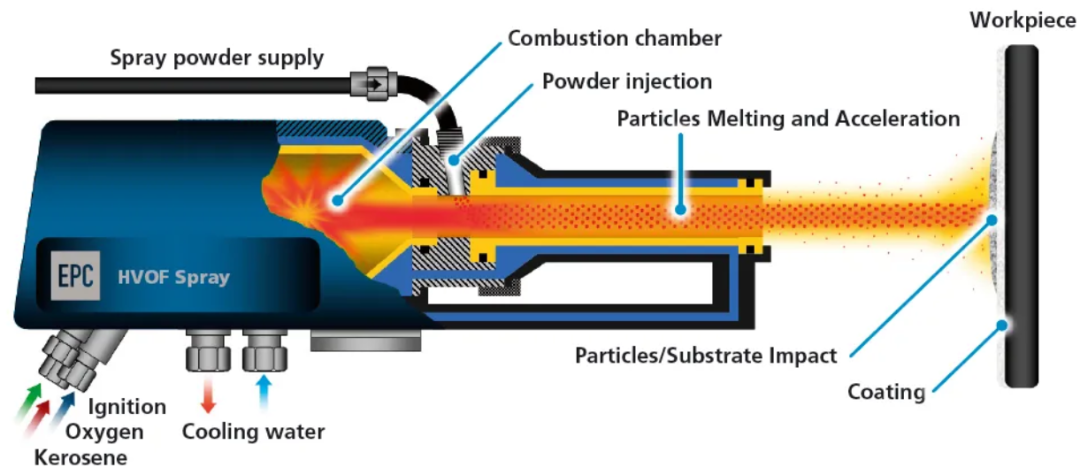
LC creates a metallurgical bond. Thermal-spray particles impact and interlock with the prepared surface, so adhesion is mainly mechanical and is more vulnerable under impact and thermal cycling.
LC deposits are dense after complete melting and solidification. Thermal-spray coatings are assembled from particles and commonly contain 1–10% porosity, which may become a corrosion path.
Thermal spray, however, transfers very little heat to the substrate and can keep bulk temperature below 150 °C. It is indispensable when the substrate cannot tolerate fusion. It also accepts a broad range of metals, ceramics, and polymers. LC can create layers from tens of micrometers to several millimeters; thermal-spray coatings are commonly below 1 mm because internal stress grows with thickness.
LC versus arc hardfacing and hard chrome
Compared with TIG or MIG hardfacing, LC provides higher energy density, better positioning, lower heat input, a smaller HAZ, and less distortion.
Hard-chrome plating generates hexavalent-chromium waste, which is toxic and carcinogenic and faces increasingly strict regulation. LC is a dry process. Ni- and Co-based clad layers can match or exceed hard-chrome hardness and wear resistance, while metallurgical bonding avoids the characteristic microcracking and improves fatigue, toughness, and corrosion resistance. Extreme-high-speed laser cladding improves the throughput and cost case for replacement.
| Selection dimension | Laser cladding | PTA | Thermal spray | Arc hardfacing |
|---|---|---|---|---|
| Bond | Metallurgical | Metallurgical | Mainly mechanical | Metallurgical |
| Heat / distortion | Low | Higher | Very low | High |
| Dilution | Can be below 5% | Commonly 10–20% | No fusion dilution | Usually high |
| Precision / complex geometry | High | Medium | Medium | Lower |
| Thick-layer / large-area efficiency | Medium to high | High | High | High |
| Typical advantage | Precision repair and high-performance layers | Economical broad thick layers | Heat-sensitive substrates and broad material choice | Mature low-cost equipment |
Emerging directions and persistent challenges
Extreme-high-speed laser cladding
EHLA or HS-LMD heats powder in flight before it reaches the surface. The particles arrive near their melting point and need little additional energy to fuse.
- process speed can reach hundreds of meters per minute;
- stable coatings can be approximately 25–250 µm thick;
- the HAZ can be only micrometers wide;
- the process is well suited to replacing hard chrome on hydraulic rods, rolls, and other rotating components.
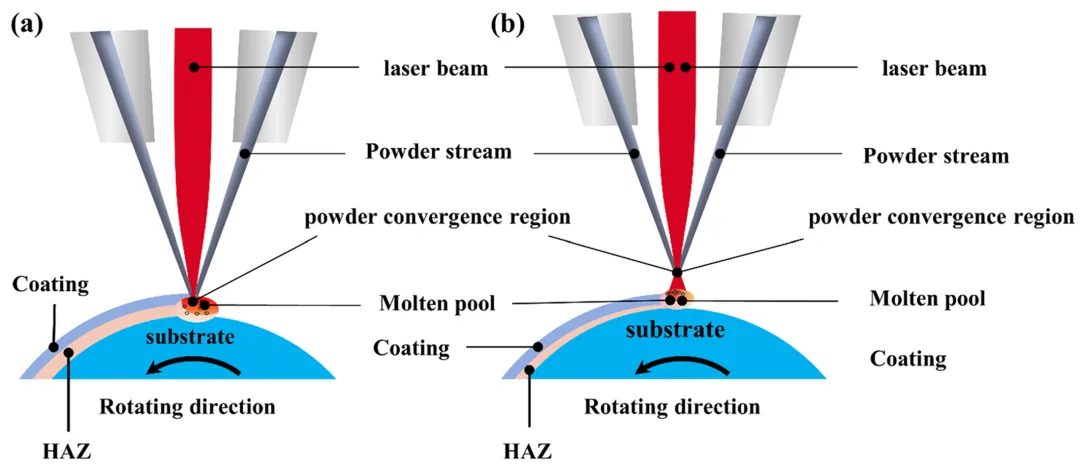
Wire-LMD and hot wire
Resistance preheating of the wire before it enters the pool lowers the laser energy needed for melting and raises deposition rate while preserving wire’s utilization, cleanliness, and cost advantages.
Special wavelengths
Copper and aluminum absorb traditional infrared lasers poorly. Green sources near 515–532 nm raise absorptance and can produce more stable, high-quality deposits at lower power.
Persistent challenges
- Residual stress and cracking: still the first-order challenge in large complex components and dissimilar material systems.
- Purpose-designed feedstock: most powders and wires were developed for conventional welding or spraying. Alloys designed specifically for rapid LC solidification could substantially expand the process window.
Conclusions and selection guidance
The essence of LC is localized laser melting and rapid solidification. Its principal advantages are metallurgical bonding, high-performance deposits, and limited substrate damage and distortion.
Its core control problem is the dynamic balance between energy input and mass input. Power, speed, spot size, and feed rate must be coordinated.
Selection should return to the application’s dominant constraint:
- choose LC when precision, low heat damage, and high bond strength dominate;
- choose PTA when large-area, high-rate deposition is needed and distortion is acceptable;
- choose thermal spray when the substrate can tolerate almost no heat;
- retain conventional hardfacing when cost dominates and the part accepts high thermal input.
Hard-chrome replacement illustrates the logic. Environmental pressure against hexavalent chromium is strong, and EHLA now combines higher productivity with the bond, performance, and environmental advantages of laser cladding.
References
- Cheng, J., Xing, Y., Dong, E., et al. “An Overview of Laser Metal Deposition for Cladding: Defect Formation Mechanisms, Defect Suppression Methods and Performance Improvements of Laser-Cladded Layers.” Materials, 15, 5522 (2022). DOI: 10.3390/ma15165522.
- Nasiri, M. T., & Movahhedy, M. R. “A New Design of Continuous Coaxial Nozzle for Direct Metal Deposition Process to Overcome the Gravity Effect.” Progress in Additive Manufacturing, 7, 173–186 (2022). DOI: 10.1007/s40964-021-00223-0.
- Plasma Spraying, Engineered Performance Coatings.
- Iqbal, H., Ascari, A., Gianassi, C., Liverani, E., & Fortunato, A. “A Process-Driven Experimental Analysis of Different Wire-Fed Directed Energy Deposition Processes Employing the Laser, Electric Arc and Plasma Sources.” The International Journal of Advanced Manufacturing Technology, 138, 741–755 (2025). DOI: 10.1007/s00170-025-15581-0.
- Li, S., Chen, L., Zhu, L., Zhang, X., & Ren, X. “Comparative Research on the Microstructure and Mechanical Properties of Traditional and Induction Heating Aided Extreme-High-Speed Laser Cladding of Ni60 Coatings.” Applied Physics A, 130, 159 (2024). DOI: 10.1007/s00339-024-07299-9.
- Lim, J. S., Oh, W. J., Lee, C. M., et al. “Selection of Effective Manufacturing Conditions for Directed Energy Deposition Process Using Machine Learning Methods.” Scientific Reports, 11, 24169 (2021). DOI: 10.1038/s41598-021-03622-z.
The original Chinese edition was published by “Laser Insights” in Chongqing on September 1, 2025, at 06:50. View the original post