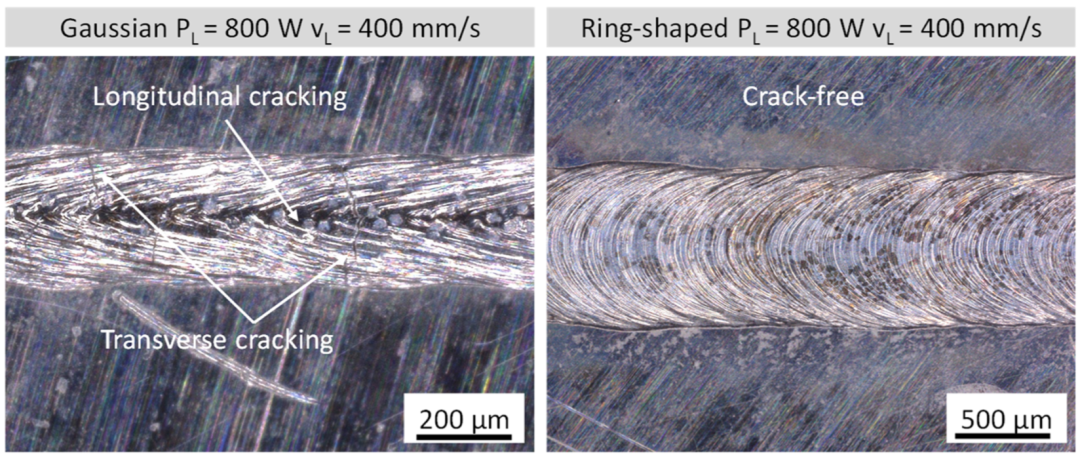
Cracking in laser-welded 6013 aluminum connects three levels of control: how the beam distributes energy, how the melt pool circulates, and how the solidification front changes from columnar to equiaxed growth. By combining Gaussian, core-ring, and annular profiles with different oscillation frequencies, the study reduced single-track crack occurrence from 80% to 0%—while also showing that a higher frequency is not automatically better.
Al6013 Beam shaping Melt-pool oscillation Columnar-to-equiaxed transition
Reduce central peak intensity and the melt-pool temperature gradient.
Transport dendrite fragments and increase heterogeneous nuclei.
Move from directional columnar growth toward randomly oriented equiaxed grains.
Reduce continuous brittle grain boundaries and stress concentration.
Application background
Lightweight structures in electric vehicles and aerospace increasingly use 6xxx-series aluminum because of its high specific strength. Fuel tanks, battery trays, and other thin-walled parts are representative applications. With a conventional Gaussian laser beam, however, the melt pool is often deep and narrow, creating two major bottlenecks:
- Hot cracking: solidification shrinkage concentrates stress while low-melting eutectic films collect along grain boundaries.
- Property loss: the weld is dominated by directional columnar grains, reducing toughness and fatigue resistance.
The reviewed work combines beam shaping and beam oscillation. An annular distribution lowers the thermal gradient, while oscillation promotes convection and transports fragments into the liquid. Together they encourage equiaxed solidification and remove the long, continuous grain-boundary paths along which cracks propagate.
The same logic extends to laser additive manufacturing: energy distribution and pool flow can be controlled to reduce thermal stress and improve density in crack-sensitive high-strength aluminum alloys.
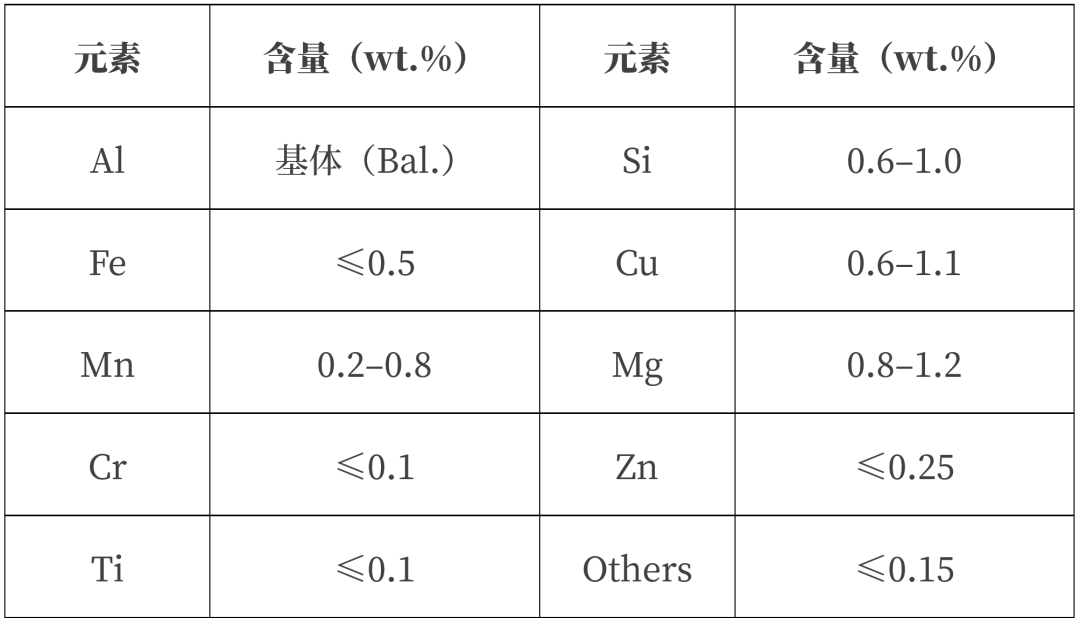
Material and solidification behavior of 6013 aluminum
6013 is an Al–Mg–Si–Cu alloy containing approximately 0.6–1.1 wt.% Cu, notably more than common alloys such as 6061. The additional copper broadens the solidification interval and makes coarse columnar growth and hot cracking more likely under rapid laser cooling.
Higher Cu than conventional 6xxx alloys
Competition between temperature gradient and growth rate
Rapid solidification promotes directional growth
Continuous brittle boundaries become crack paths
At high cooling rate, the temperature gradient \(G\) and the solidification-front velocity \(R\) vary strongly from fusion line to pool center. Low-melting constituents segregate to interdendritic and grain-boundary liquid. Shrinkage strain can then open those weak films into cracks.
Beam shaping: controlling the energy distribution
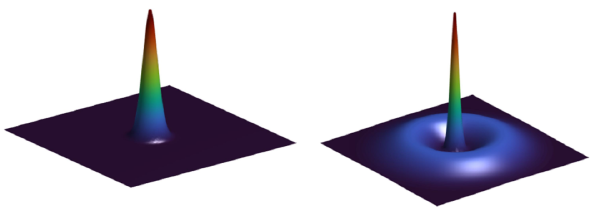
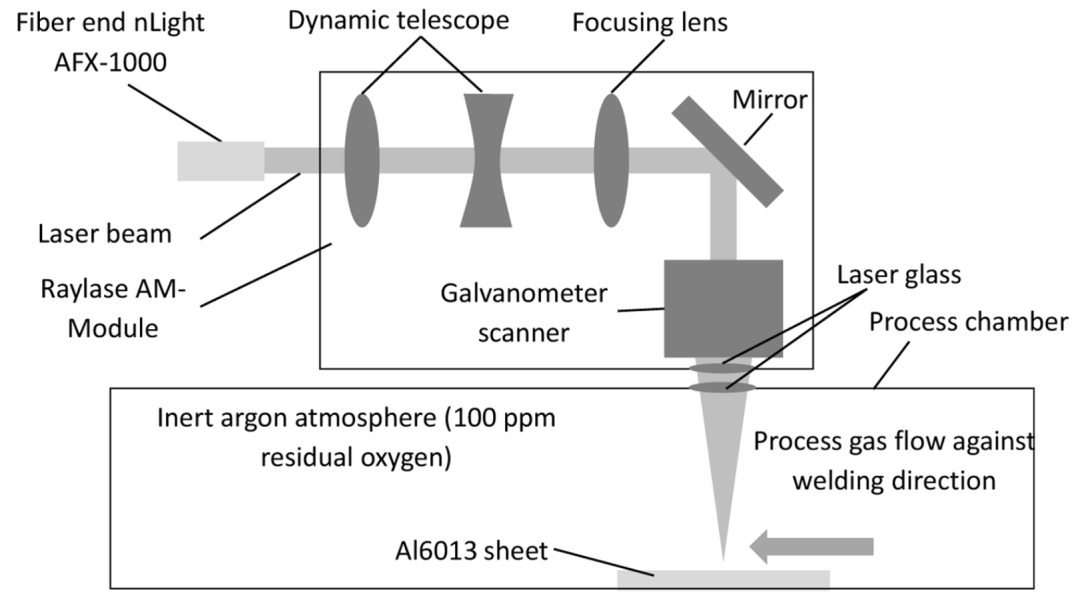
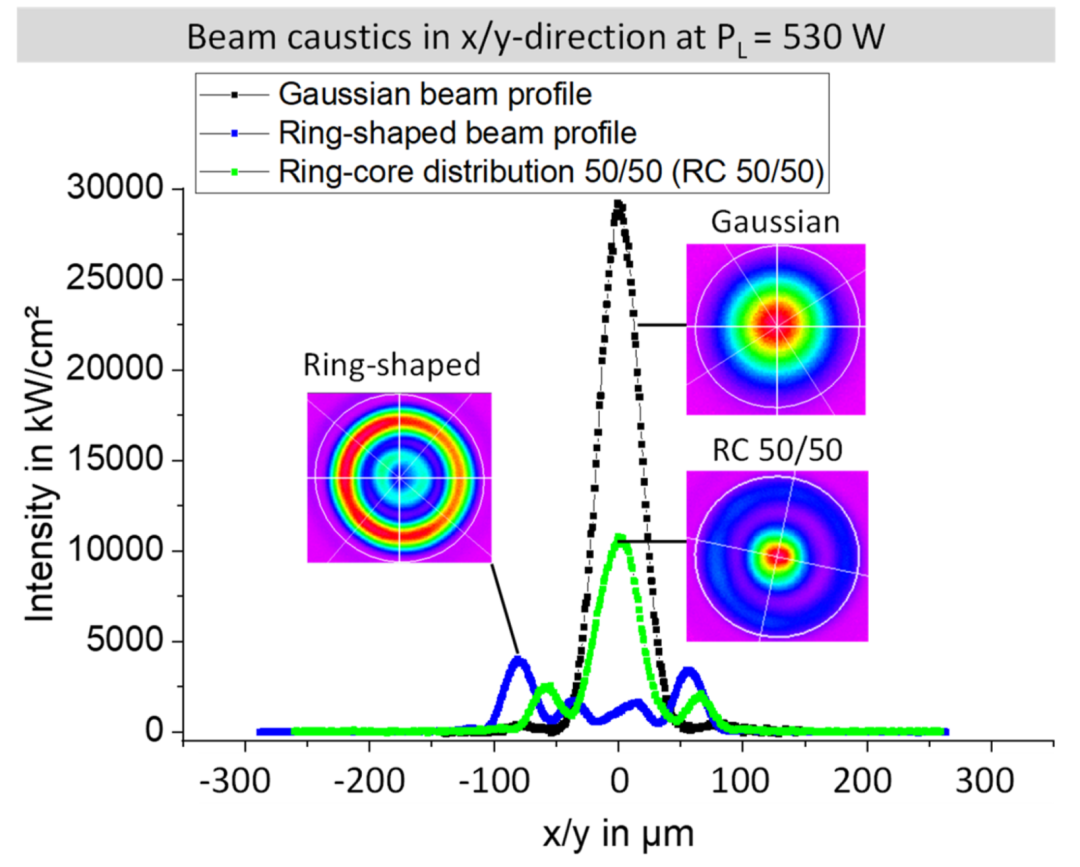
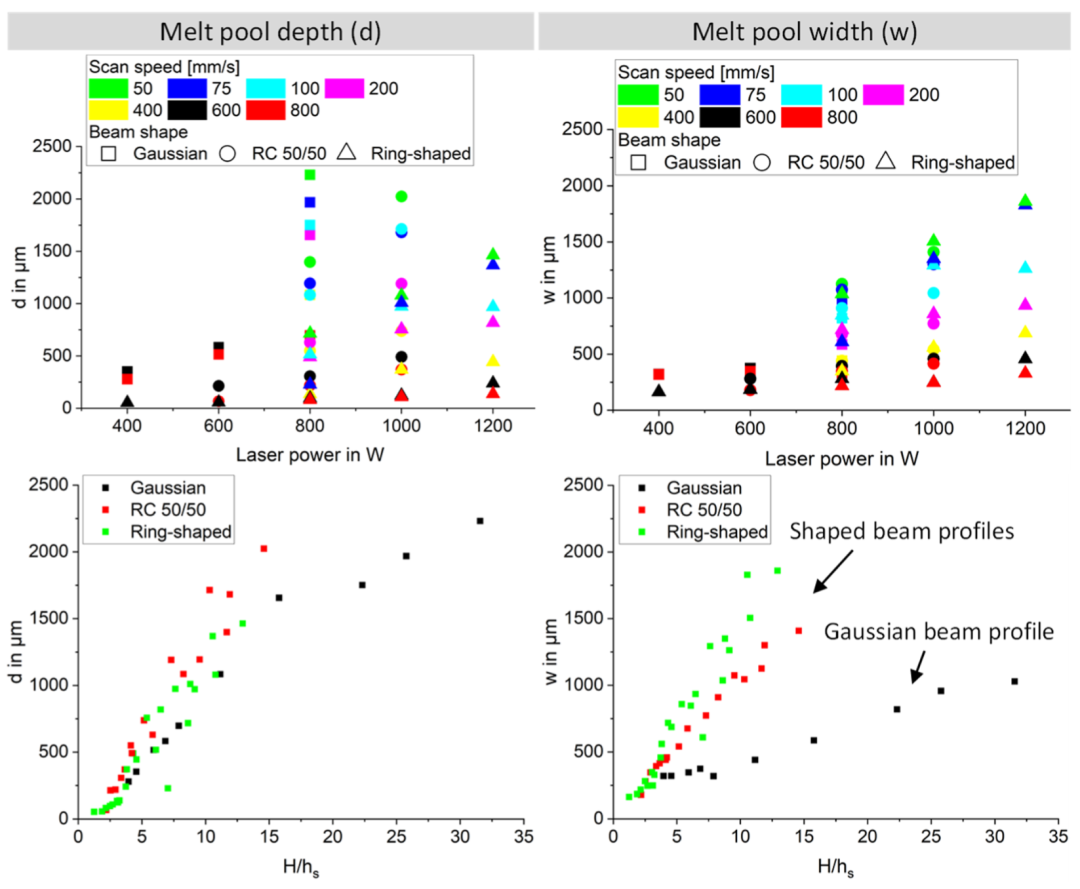
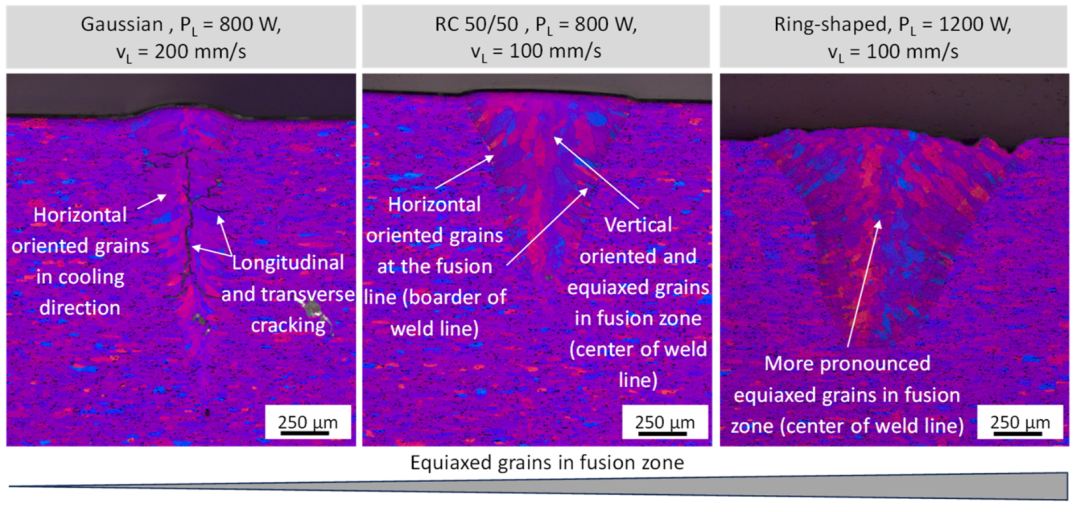
The experiments compare a conventional Gaussian beam, a 50/50 core-ring distribution, and an annular beam. Their differences are not cosmetic: they change central intensity, pool aspect ratio, keyhole stability, and solidification gradient.
Energy concentrated in the center
29.5 kW/cm²
Deep narrow keyhole, high \(G\), high crack risk
50% core, 50% ring
12.15 kW/cm²
Balances penetration and lateral spread, \(d/w\approx1.2\)
90% ring, 10% core
4 kW/cm²
Lower gradient and longer high-temperature residence
Conventional Gaussian beam
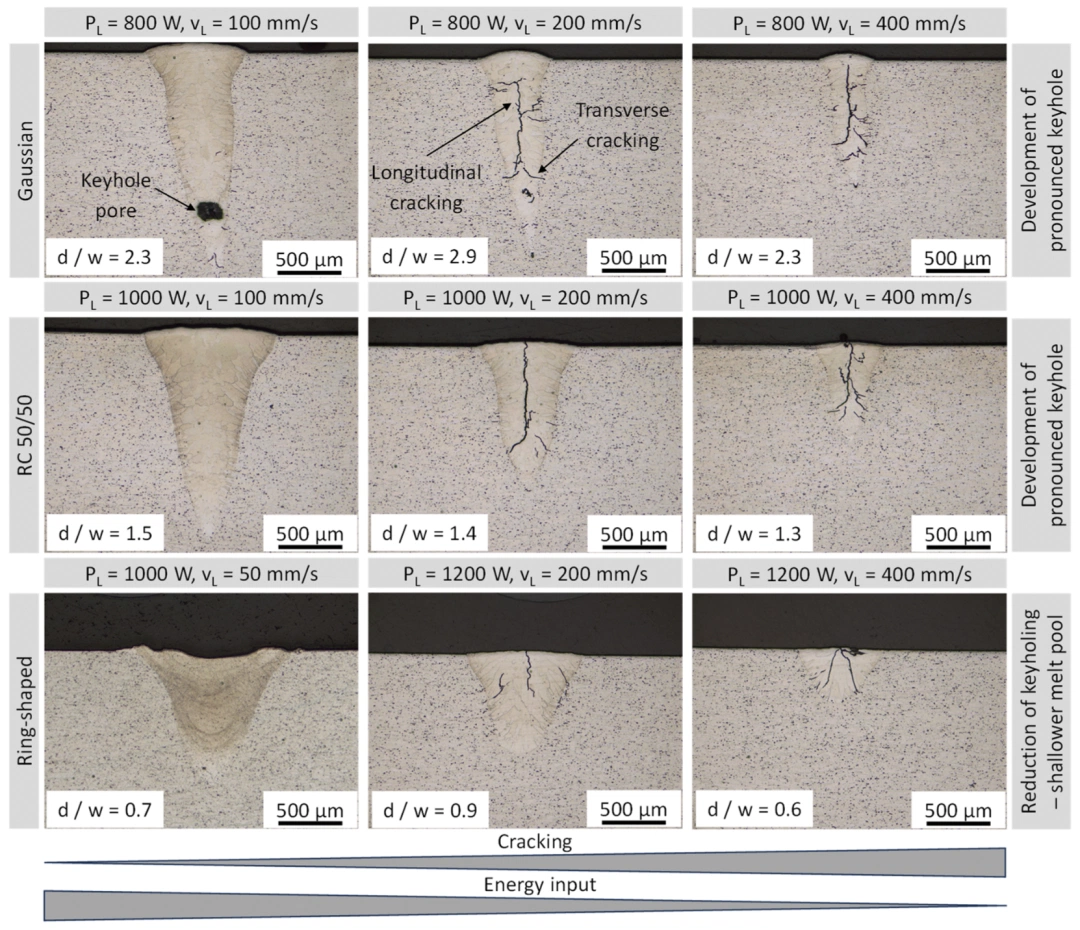
The Gaussian profile concentrates power in the center, reaching 29.5 kW/cm² in the reported setup. Rapid vaporization forms a deep keyhole and a high depth-to-width ratio.
Two consequences increase cracking:
- Large thermal gradient: columnar grains grow directionally from the fusion line toward the center, and their boundaries concentrate shrinkage stress.
- Keyhole instability: fluctuations in vapor recoil promote spatter and porosity, adding local stress raisers and disturbing solidification.
RC 50/50 core-ring beam
The RC 50/50 mode divides energy equally between the central core and outer ring. Peak intensity falls to 12.15 kW/cm², approximately 41% of the Gaussian value.
It preserves enough central energy for penetration while spreading heat laterally. The measured pool aspect ratio \(d/w\) is about 1.2, intermediate between the Gaussian and strongly annular cases.
Annular beam
The annular profile places 90% of energy in the ring and only 10% in the center. Peak intensity drops to 4 kW/cm², about 14% of the Gaussian value.
Its main benefits are:
- Lower thermal gradient: heat is distributed over a wider area, reducing \(G\) and making solidification less directional.
- Longer high-temperature residence: the pool edge remains hot longer, giving liquid more time to feed interdendritic shrinkage gaps.
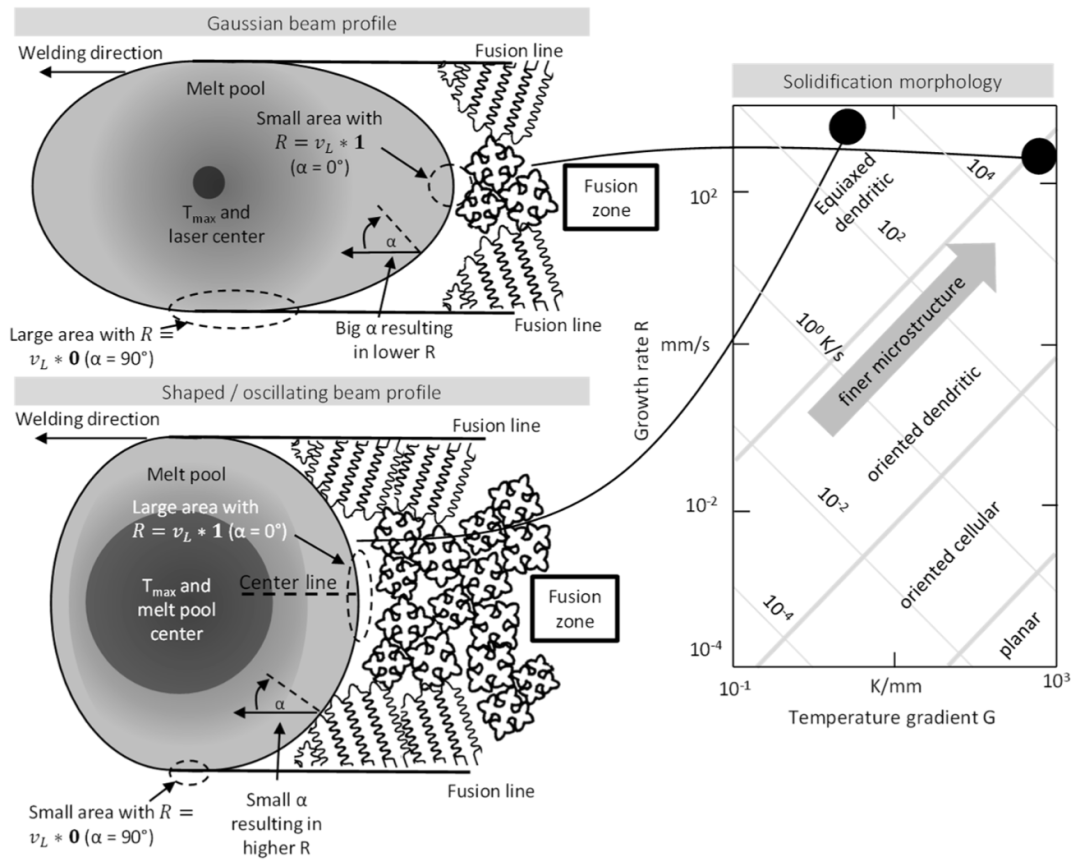
Beam shaping therefore controls the \(G/R\) ratio by changing where heat enters the pool. Lower \(G\) and a modified front velocity move conditions toward equiaxed growth.
Beam oscillation: stirring the melt pool
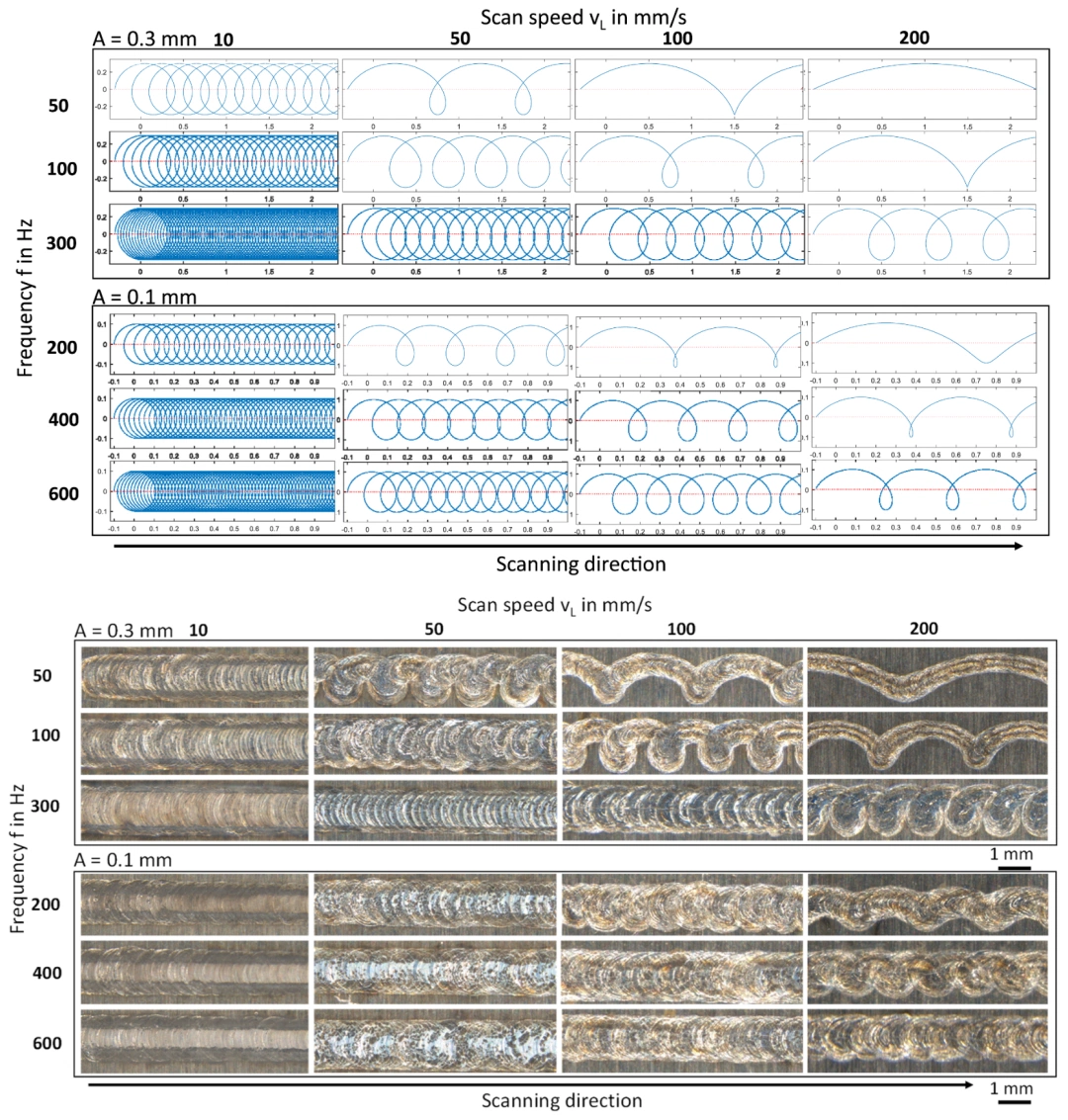
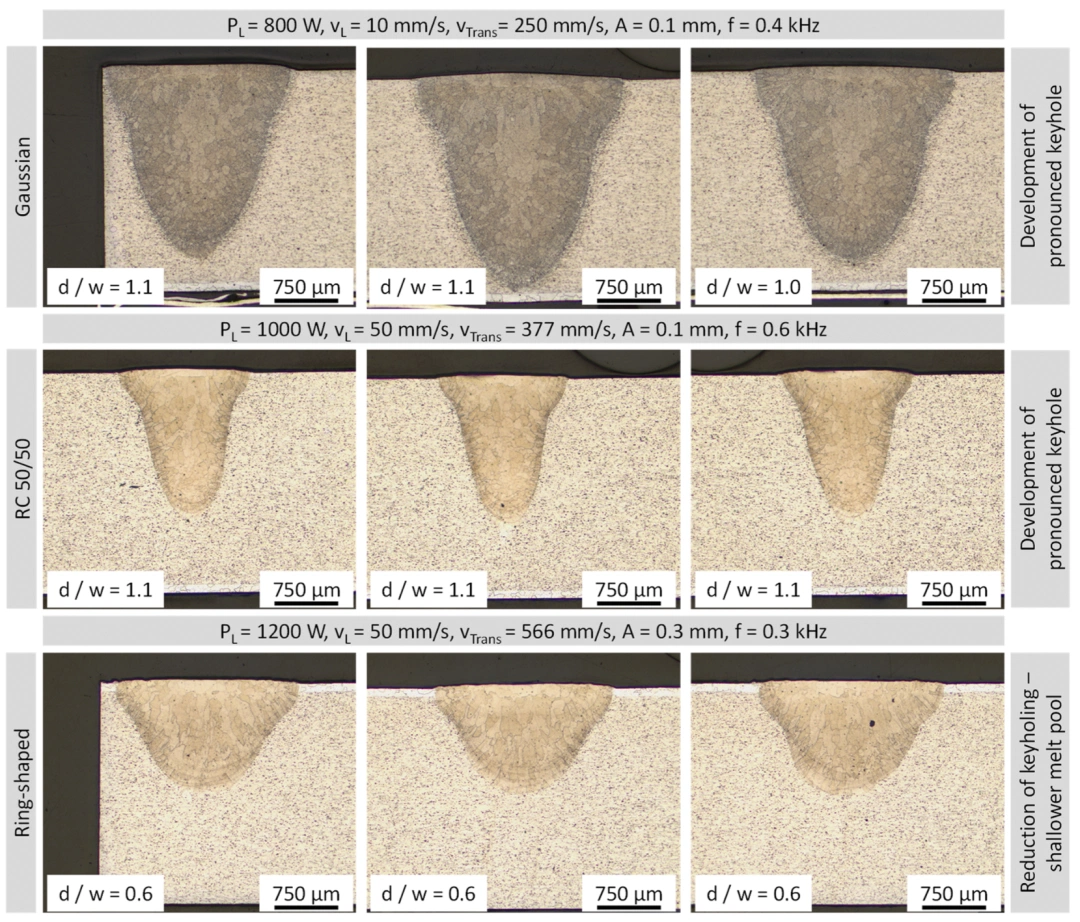
Beam oscillation is already used in automotive overlap welding to bridge gaps, especially in aluminum body and battery components. Here it is used to suppress cracking, and the results contain two important counterexamples to the idea that “more dynamic” is always better.
A low frequency of 0.1 kHz is more effective
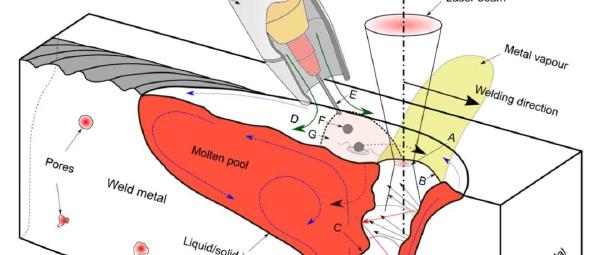
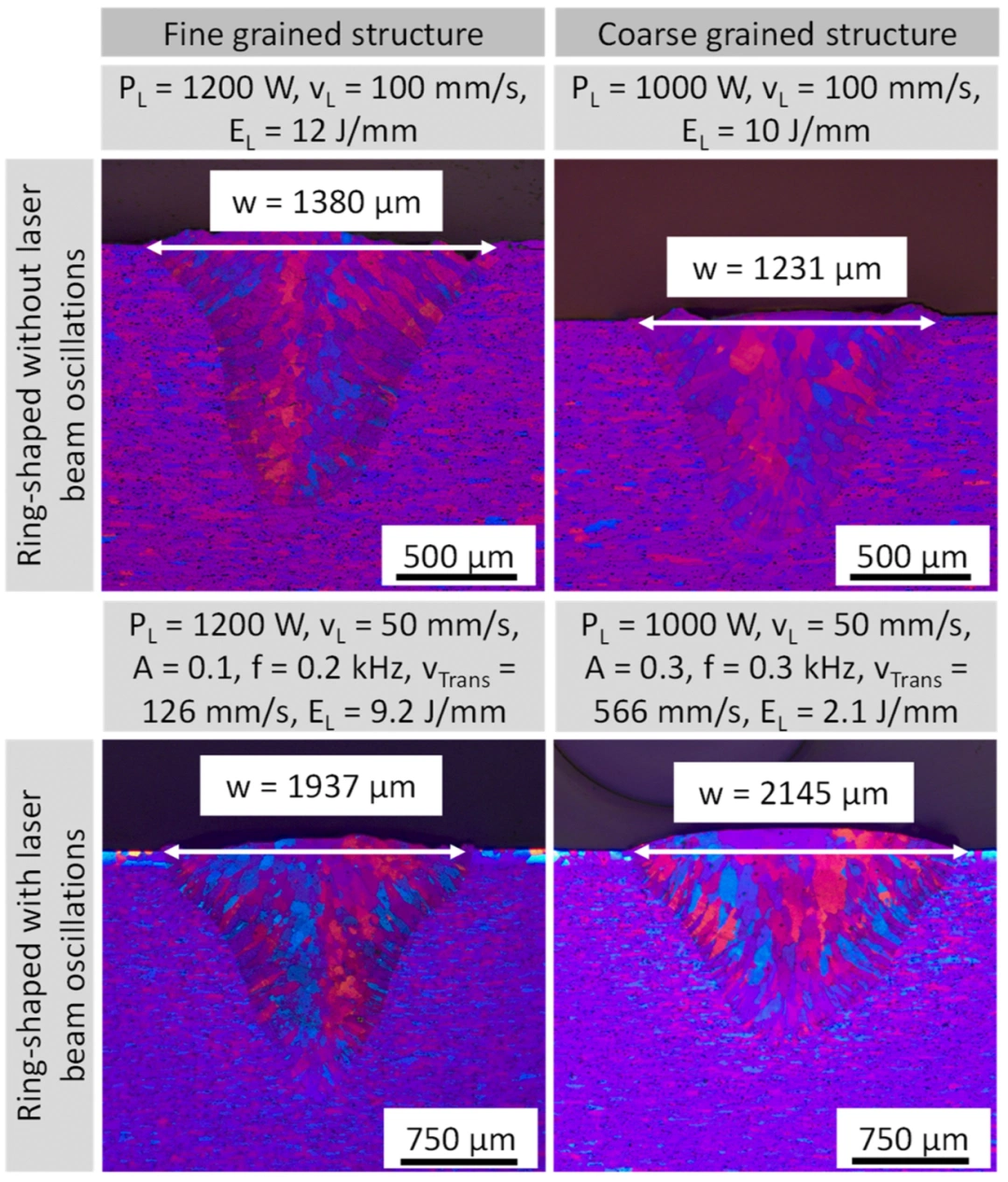
At an amplitude of 0.3 mm and a frequency of 0.1 kHz, a stable vortex forms in the melt pool. It transports dendrite fragments from the solidification front toward the pool center. Those fragments survive as heterogeneous nucleation sites and promote equiaxed grains.
Frequencies above 0.5 kHz can be counterproductive
When \(f>0.5\ \mathrm{kHz}\), periodic forcing becomes too strong and pool stability decreases. Porosity can increase. The process route uses high-speed beam motion, but the experiment shows that the effective solution is an optimized frequency window—not the highest available frequency.
Dendrite fragments reach the pool center and seed equiaxed growth.
Pool stability falls and porosity risk rises.
Solidification theory and microstructure control
The study uses Kou’s solidification framework. The ratio \(G/R\) describes the tendency toward columnar or equiaxed growth, while \(G\times R\) represents the cooling rate.
High \(G/R\): columnar growth
A Gaussian beam creates high \(G\) and comparatively low effective \(R\), increasing \(G/R\). Grains grow along the heat-flow direction, and continuous aligned boundaries become preferred crack paths.
Low \(G/R\): equiaxed growth
An annular beam combined with oscillation lowers \(G\), changes \(R\), and moves \(G/R\) toward the equiaxed threshold. Randomly oriented equiaxed grains interrupt long boundary networks and make crack propagation less direct.
Cooling rate \(G\times R\)
- Gaussian beam: \(G\times R\) can approach 10⁷ K/s, generating very fine columnar grains but also high thermal stress.
- Annular beam plus oscillation: the rate falls toward 10⁶ K/s, allowing more dendrite coarsening and solute redistribution and producing a mixture of coarser equiaxed and residual columnar grains.
The paper does not quantify grain size, but it argues that the mixed microstructure can improve the strength–toughness balance through grain-boundary strengthening and the interruption of brittle paths.
Engineering implications
The single-track result demonstrates the potential of combined shaping and oscillation, but stable production requires further validation.
Long-term stability of beam-shaping hardware
Galvanometers and dynamic optical elements may drift after hours of operation. Online beam diagnosis or scheduled calibration is needed because a change in the actual intensity distribution changes \(G/R\) even if the nominal recipe remains unchanged.
Humidity and hydrogen-related defects
Aluminum welding is highly sensitive to hydrogen. Results obtained in controlled laboratory humidity cannot be transferred directly to a humid production floor. Surface moisture, shielding-gas dew point, cleaning quality, and the delay between cleaning and welding all affect pores and cracks.
Adaptive beam shaping
A future closed loop could use melt-pool images, optical emission, or acoustic signals to adjust core-ring ratio, amplitude, and frequency in real time. Reliable detection of crack precursors would shift crack control from an offline probability window toward state-based deterministic processing.
Source material
This article is based on the Chinese “Laser Insights” review Aluminum Alloy Laser Welding Crack Suppression: Beam Shaping + High-Frequency Oscillation. Figures and experimental conclusions originate from:
- Thomas Stoll et al. Crack-Free Manufacture of Single Weld Tracks on Aluminum Alloy 6013 with the Usage of Laser Beam Shaping and Oscillation Strategies. Journal of Advanced Joining Processes, 10 (2024), 100269.
- DOI: 10.1016/j.jajp.2024.100269
The article is intended for technical study. Engineering use should follow the original paper, applicable material specifications, and joint-level validation.